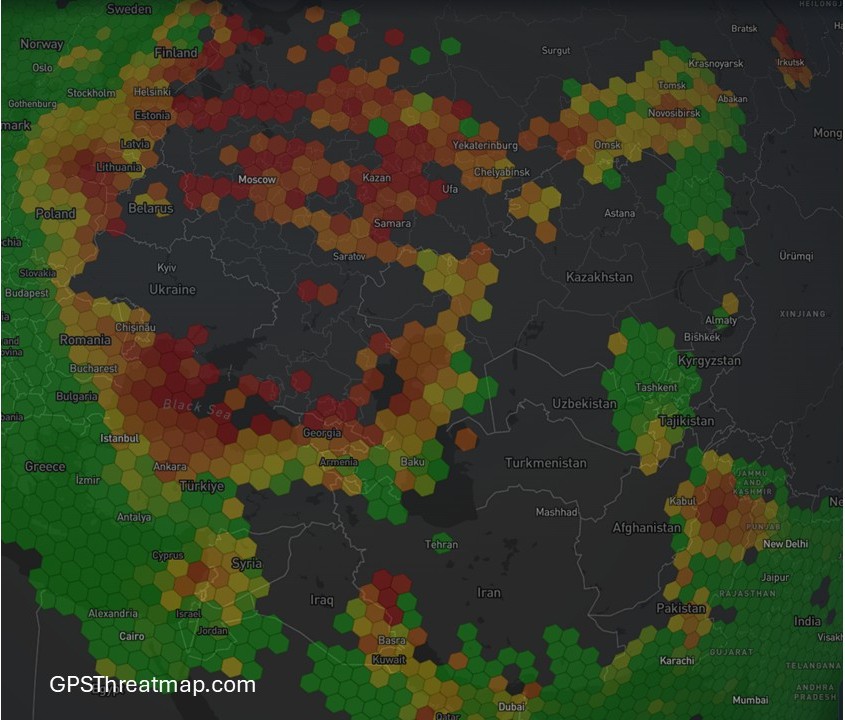




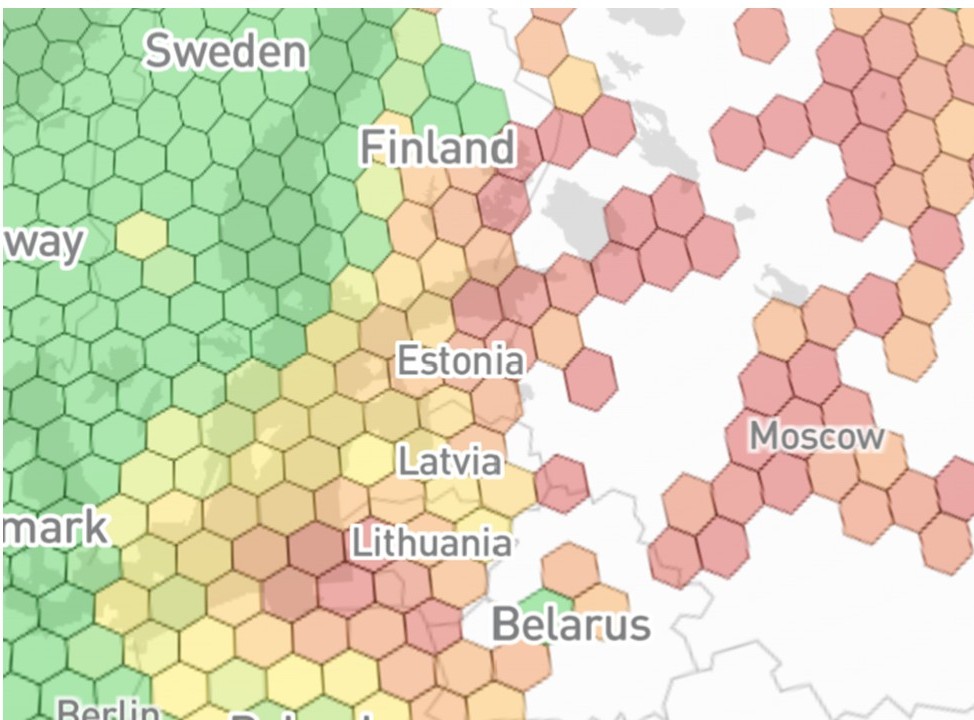
Image: GPSThreatMap.com
What’s new: A paper from Finland examining GNSS disruption found that strong jamming can overcome and degrade Galileo’s Open Navigation Service Message Authentication (ONSMA).
Why it’s important: ONSMA is intended to make signals more resilient and much less subject to spoofing. It does that, but this study showed some weaknesses.
What else to know:
- The effectiveness of cryptographic authentication depends on the integrity and continuity of the underlying physical-layer signal. High-power jamming can significantly degrade signal quality, making it difficult to successfully decode authentication messages and potentially resulting in authentication failures.
- The study team observed that all GNSS signals across the L1, L2, and L5 frequency bands were affected.

Analysis of real-world GNSS jamming in the Baltic region: RFI characterization, receiver response, and collaborative detection strategies
, , ,
- Department of Navigation and Positioning, Finnish Geospatial Research Institute (FGI-NLS), Vuorimiehentie 5, 02150 Espoo, Finland
Abstract
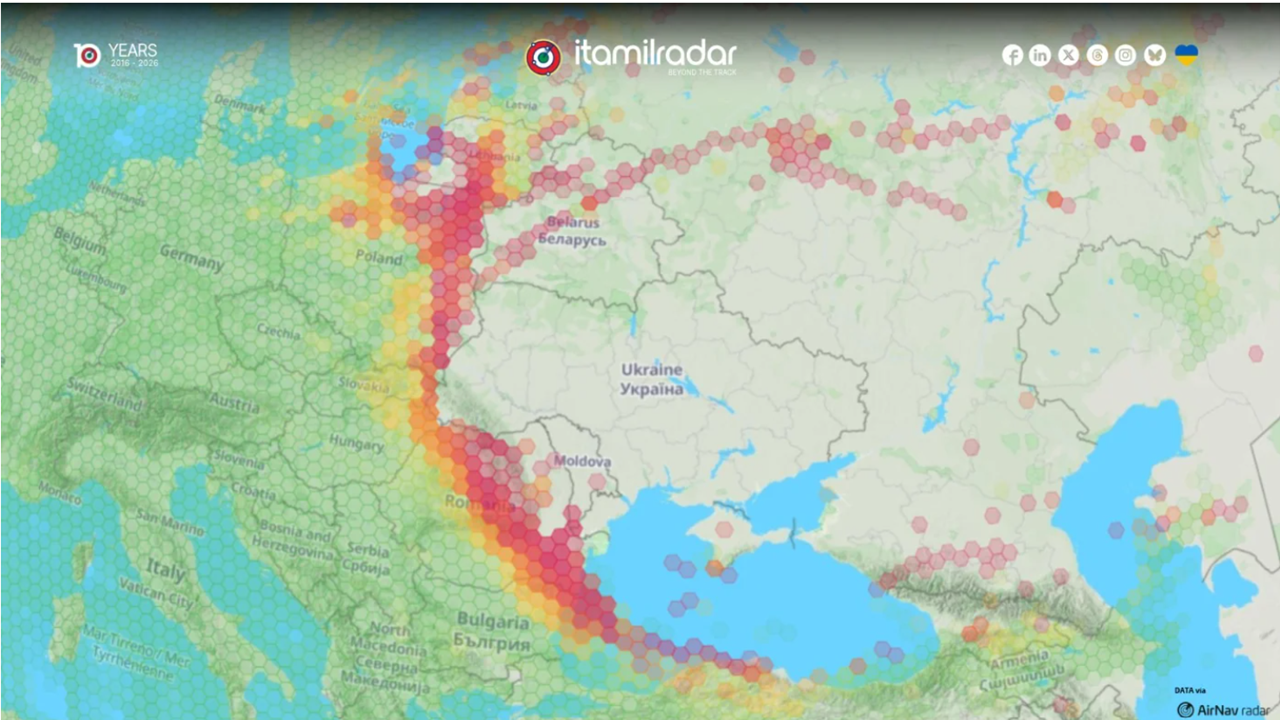
GNSS jamming deployed as an electronic warfare tactic near active conflict zones poses a growing threat to civilian navigation systems. This paper presents a static measurement campaign conducted in Eastern Estonia during a real-world jamming event. During the campaign, synchronized raw In-phase and Quadrature (I/Q) data and Septentrio Binary Format (SBF) receiver logs were collected. Spectral analysis of the raw I/Q data identifies a dominant interference source, whose type and spectral properties are systematically characterized. Cross-layer analysis reveals that, although the observed interference does not cause a complete loss of receiver tracking, measurable degradation is evident in C/N0, tracking loop jitter, and code frequency deviation across affected signals, with a corresponding impact on positioning accuracy. The results further indicate that Galileo Open Service Navigation Message Authentication (OSNMA) is sensitive to the observed interference levels, as demonstrated by satellite-specific authentication failures and a drop in overall authentication availability during jamming episodes, even in the absence of spoofing signals. This finding suggests a previously understudied indirect vulnerability of the OSNMA service under moderate real-world jamming conditions. A multi-metric collaborative detection concept combining pre-correlation domain and receiver-internal features is also discussed to improve detection confidence over single-metric approaches. The complete dataset, including raw I/Q data and SBF logs, comprises recordings of interference observed near a conflict zone, is released as open data to support the development and benchmarking of GNSS interference detection and mitigation algorithms.