


Indonesia working with GAUSS Research Foundation on eLoran & ODFM

November 4, 2026

Written by Editor

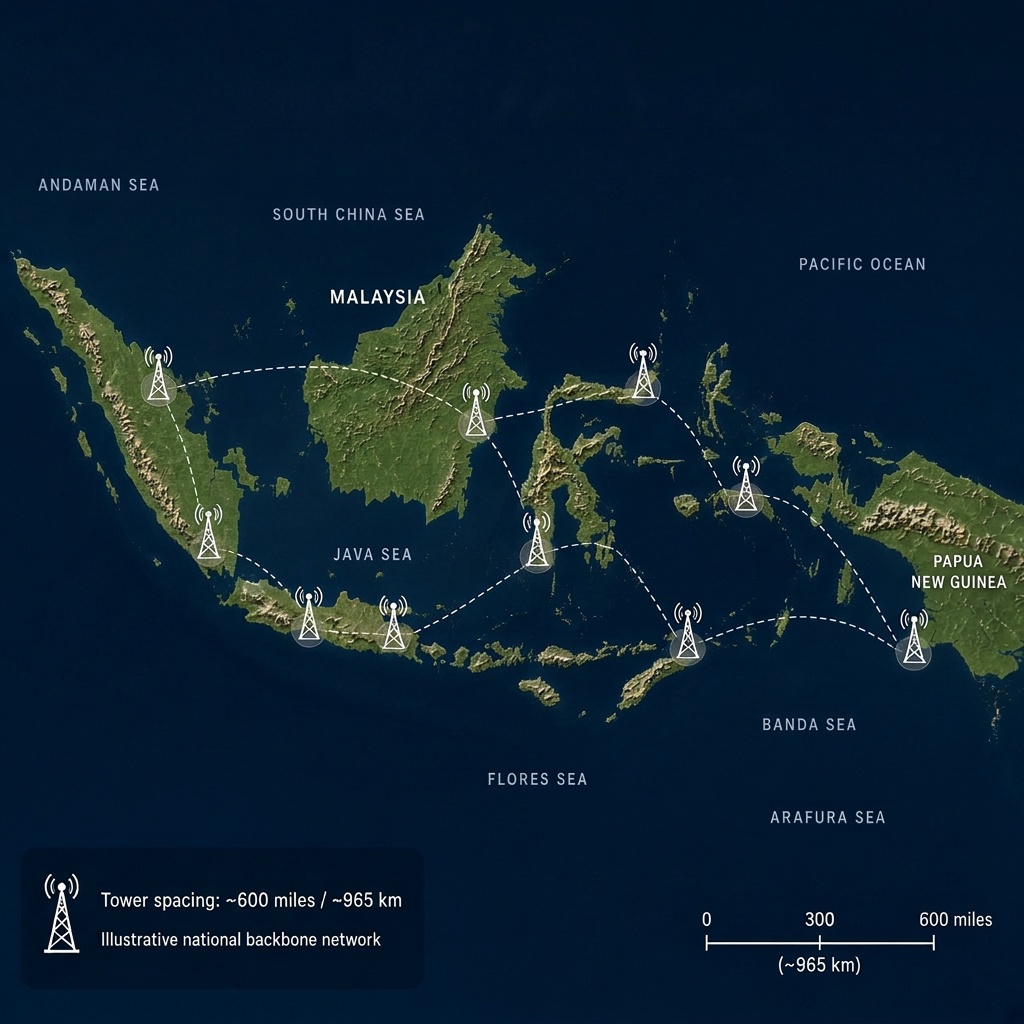
Image: Shutterstock AI

What’s new: A paper by Indonesian researchers supported by the GAUSS Research Foundation recently posted on IEEE. It examines the potential usefulness of orthogonal frequency-division multiplexing (ODFM) in deploying eLoran.

Why it’s important:

  • With the UK and France deploying eLoran, there seems to be a lot of interest in the technology, especially for maritime. And Indonesia might be even more of a maritime nation than the U.K., if that is possible!
  • This is the first eLoran paper we know of from Asia that is not from Chinese researchers.

What else to know:

  • The Indonesian government and the GAUSS Research Foundation signed an agreement to work together last year.
  • We understand a second part of the project began this summer to develop a field programmable gate array (FPGA) transmitter and receiver.
  • GAUSS Research Foundation has published several papers on eLoran and combining eLoran and GNSS.

 

New Waveforms to Improve Positioning, Navigation, and Timing Accuracy for LF LORAN Systems

Abstract:

Long range navigation (LORAN) is a terrestrial radio navigation system that determines position by measuring time differences between low frequency (LF) pulse transmissions from fixed land-based stations. The LORAN system, operating at 100 kHz, offers high transmission power, wide coverage, and good phase stability, but its pulse-based structure limits positioning accuracy and sensitivity. The evolution toward enhanced Loran (eLoran) improves robustness and interference resistance, particularly when satellite navigation such as the Global Navigation Satellite System (GNSS) is unavailable. This research proposes a new approach to signal design in the LORAN bandwidth by introducing a single-carrier semi-continuous waveform that aims to increase the number of positioning, navigation, and timing (PNT) measurements in each signal interval. By enabling more frequent PNT measurements, the proposed semi-continuous waveform design improves time resolution in the LORAN frequency band. As a result, the method is expected to produce more accurate and stable PNT performance compared with conventional pulse-based LORAN signals.

What Can YOU Do? How Can YOU Help?

PNT is the quiet backbone of everything but too many leaders still don't see the risk.

But you do. You understand the systems, the dependencies, the failure chains. That insight is rare — and it's exactly what your country needs right now. Contact your government leaders and industry decision-makers and tell them resilient PNT isn't a feature — it's the foundation everything else depends on.

Start the Conversation

Use our Resilient PNT Key Talking Points to make the case.

U.S. Advocates

Find your representatives at Congress.gov, then use our email template to reach them in minutes.

When you get a response, let us know. Every conversation strengthens the mission.