



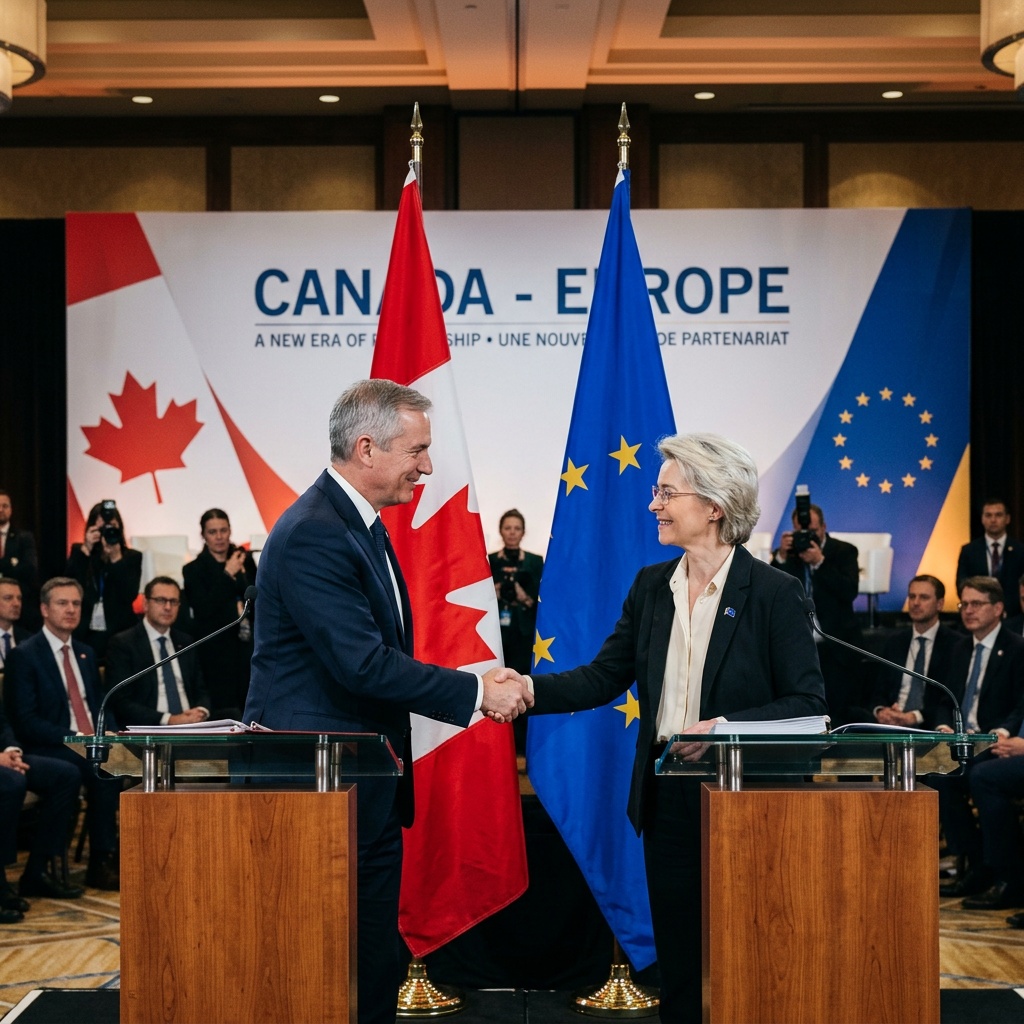
Image: Shutterstock AI
What’s new: Canada formally increasing ties with Europe, perhaps as the EU’s first Associate Member. Closer cooperation and upgraded access to Galileo will be a part of this.
Why it’s Important: It is another confirmation that (1) Galileo is superior in many ways to GPS, and (2) Canada and the U.S. are becoming more estranged.
What else to know:
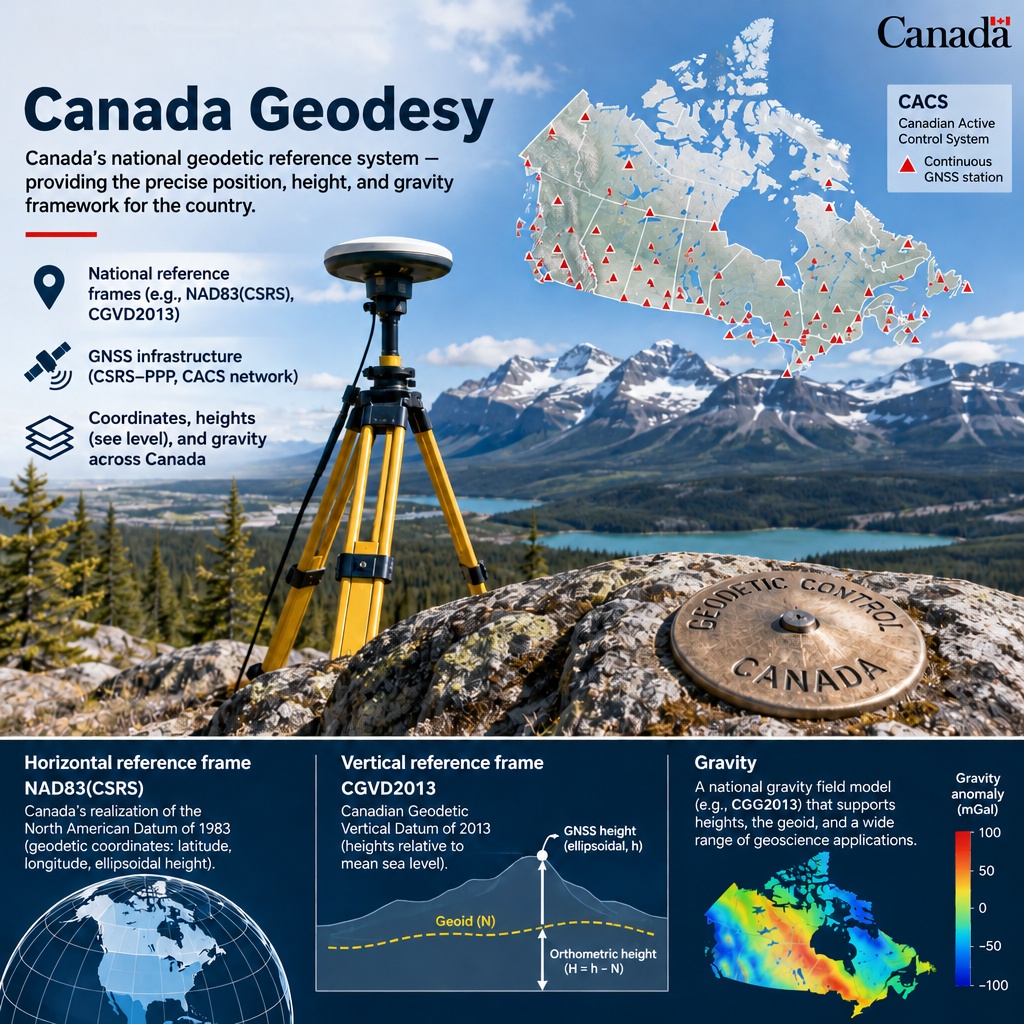
- While not mentioned in this article, Canada’s government has recently focused much more on its geodesy and PNT needs.
- That pesky $1B/day number cropped up again. It is far too low, but just won’t go away!\\
UPDATES AND CLARIFICATIONS – The following points are from an authoritative colleague in Canada:
-
This is not a PRS collaboration, although the media has repeatedly tried to say it is. It is a Canada-EU “geodetic” collaboration on Galileo operations, including the High Accuracy Service, to improve Galileo performance and dual use GNSS options in Canada. It includes an agreement with ESA to install Galileo stations in Canada in support of global constellation operations.
-
This is first & foremost a “geodetic” project to create a system of systems layered RESILIENCE; Canada is NOT stopping geodetic work with the US NGS and other US Agencies + US Academia. Geodesy is global and Canada needs continued collaboration and work with US and the world.
-
As always, it is good to refer to official announcements and take media reports with a grain of salt.

Canada Opens Formal Talks on Galileo Access as Arctic GPS Accuracy Degrades to 1 Kilometer
Ottawa seeks Galileo encrypted access as Arctic GPS accuracy falls below one mile
Canada signed two landmark space agreements at the 21st Canada-EU Summit in Montreal on Friday, opening formal negotiations to access Galileo’s government-grade encrypted navigation signal for the first time — a signal engineered to resist the jamming and spoofing that makes ordinary GPS a liability in a contested environment. The Canadian Armed Forces have documented Arctic GPS positional error reaching 1 kilometer (0.62 miles) in the high Arctic, where low satellite elevation angles degrade the system that underpins $1 billion in daily economic activity.
The agreements, signed by Foreign Affairs Minister Mélanie Joly and EU Commissioner for Defence and Space Andrius Kubilius under the broader Canada-EU Alliance for the Future, formalize two parallel tracks: negotiations toward a framework for Canadian access to Galileo services — including the Public Regulated Service, Galileo’s encrypted, anti-spoofing government signal — and exploratory talks on an administrative arrangement covering Canada’s potential involvement in IRIS², the EU’s €15.6 billion next-generation secure satellite constellation (approximately $17.47 billion USD).