



GPS is Major Threat Vector in US Maritime Cyber Plan

January 11, 2021

Written by Editor

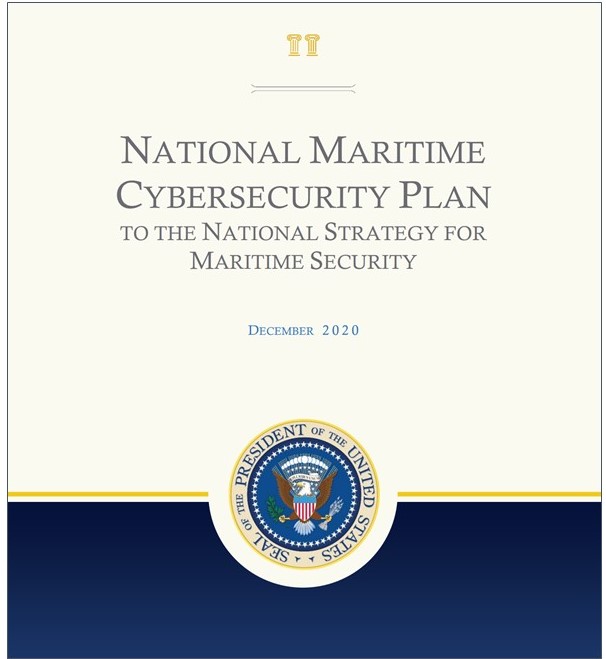
The National Maritime Cybersecurity Plan issued on the 2nd of December and recently made available joins a list of national strategies and plans addressing security for the 95% of all U.S. trade that depends on maritime. It outlines a number of challenges and threats the nation must address. None are trivial.

Challenges include a too-small workforce, confused federal-level governance, and information/intelligence sharing. Also, a highly varied set of commercial and other governmental stakeholders, many of which might find it difficult to establish a credible cybersecurity program.

Threats are many and varied to both Information Technology (IT), and Operational Technology (OT) systems. A category of threat is described as coming through electromagnetic spectrum system (EMS). Threats via EMS include communications systems and GPS.

At one point the plan describes how, in 2016, the Department of Homeland Security predicted that loss of GPS signals would bring port operations to a halt if a backup system wasn’t available. This wasn’t a difficult prediction because the U.S. Coast Guard had already seen it happen in 2014.

Elsewhere the plan describes jamming and spoofing navigation as significant problems. Also how 14 maritime groups petitioned the U.S. Coast Guard Commandant to raise the issue at the International Maritime Organization (IMO). GNSS interference was later described by IMO as an urgent and safety of life issue.

It is good to see another national document including GPS disruption as a cyber issue. Disruptions:

  • Interfere with IT and OT systems’ ability to communicate,
  • Interfere with end use devices (computers and equipment of all kinds), and
  • Can insert false data into systems.

Find the plan here:  NATIONAL MARITIME CYBERSECURITY PLAN, TO THE NATIONAL STRATEGY FOR MARITIME SECURITY

What Can YOU Do? How Can YOU Help?

PNT is the quiet backbone of everything but too many leaders still don’t see the risk.

But you do. You understand the systems, the dependencies, the failure chains. That insight is rare — and it’s exactly what your country needs right now. Contact your government leaders and industry decision-makers and tell them resilient PNT isn’t a feature — it’s the foundation everything else depends on.

Start the Conversation

Use our Resilient PNT Key Talking Points to make the case.

U.S. Advocates

Find your representatives at Congress.gov, then use our email template to reach them in minutes.

When you get a response, let us know. Every conversation strengthens the mission.

More PNT News

Russia attacks NATO with drones – The Telegraph

Russia attacks NATO with drones – The Telegraph

Image: Shutterstock What's new: A report of Russia spoofing Ukrainian drones and sending them against NATO targets. Why it's important: Russia is attacking NATO kinetically. This is not just electronic warfare anymore. Secondarily: If true, it shows Ukraine is still...

Canada Ending Radio Time Signals (accuracy

Canada Ending Radio Time Signals (accuracy <1ms)

Image: Shutterstock What's new: Canada has announced it is cancelling its short wave time signals as of the 22nd of June 2026. Why it's important: The other sources of official time from the Canadian government (National Research Council, or NRC) are less accurate...

“We can track Starlink users…” – Fast Company

“We can track Starlink users…” – Fast Company

Image: Shutterstock What's new: A report that multiple companies are offering governments the ability to geolocate Starlink terminals.  Why it's important: Security concerns - an adversary could target, kidnap, kill, etc. users. Privacy concerns - user location data...

Get PNT News in Your Inbox