



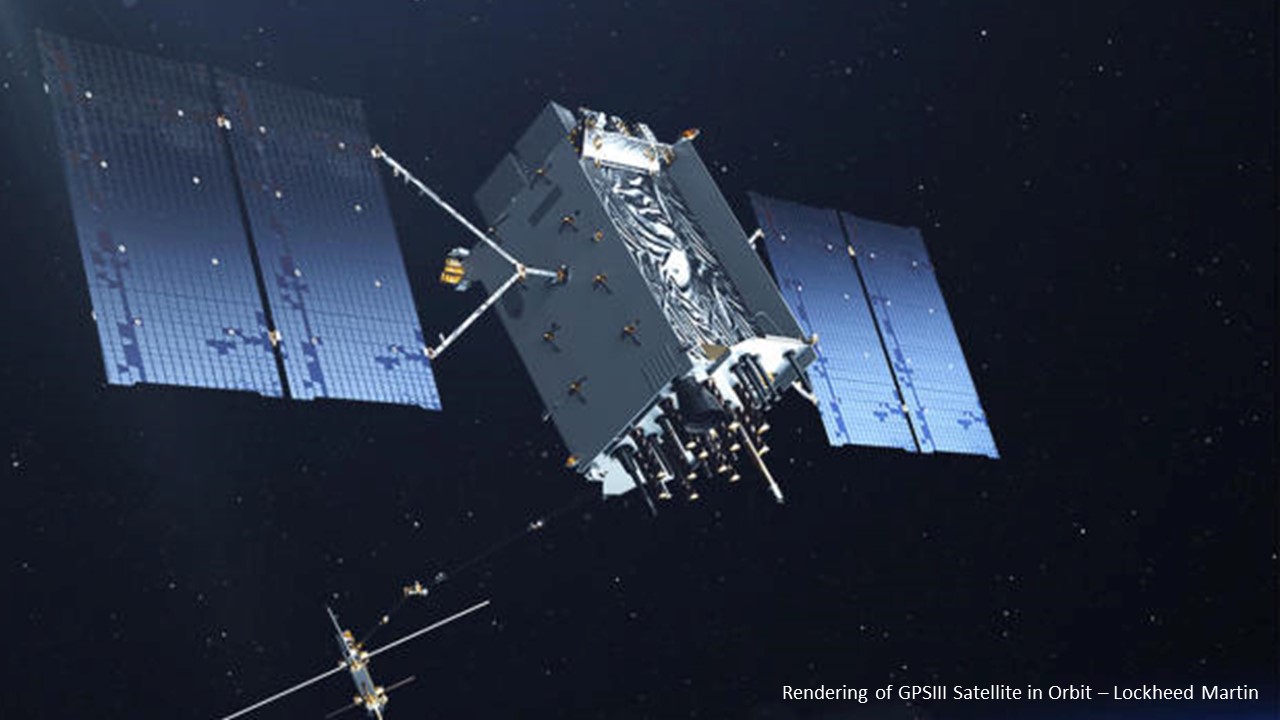
Image: Lockheed Martin
What’s new: A thought piece from the highly respected Aerospace Corporation.
Why it’s important: The article includes a number of important policy-related comments and observations. For example:
- “One of the most fundamental questions is: Who is the decision maker for what our overarching national PNT approach should be?”
- “The goal is moving beyond two extremes,” Langer said. “One view is that everything’s fine. We’ve got GPS and it does what we need. The other is that GPS is vulnerable and we shouldn’t rely on it. Neither perspective is complete.”
- Between those perspectives lies a broader set of questions about how PNT capabilities will evolve in the years ahead. Those questions span technology, policy, commercial participation, resilience and the needs of an increasingly varied user community.
What else to know: Aerospace Corp is an FFRDC – Federally Funded Research and Development Corporation. They typically focus on technical analyses and other tasks assigned and funded by the government. Our sense is they don’t often enter policy discussions on their own.

For decades, GPS has quietly transformed the way the world operates. What began as primarily a military capability has become a cornerstone of modern life, enabling everything from defense operations and emergency response to transportation networks, financial transactions and the smart phones carried by billions of people around the world.
Today, GPS is far more than a navigation system. It is critical infrastructure woven throughout and supporting countless activities across government, industry and society. As reliance on GPS has grown, so too has the importance of ensuring users can trust the position, navigation and timing (PNT) information that underpins those activities.
For John Langer, an Aerospace associate principal director who has worked on GPS for decades, that realization became personal while working with military personnel who relied on GPS-enabled equipment in combat environments.