



Image: RNT Foundation

Your Responses to the FCC’s NOI on PNT
A look at the main concerns during the comment period.
Dana A. Goward
America’s Global Positioning System (GPS) is simultaneously amazing, indispensable, and vulnerable. If its positioning, navigation, and timing (PNT) signals were to become unavailable for any reason, the nation and its citizens would be irreparably harmed. So says the Federal Communications Commission (FCC).
At the same time, many of America’s adversaries, most notably China and Russia, have terrestrial sources of PNT in addition to those from Global Navigation Satellite Systems (GNSS). This makes GPS satellites and signals particularly attractive targets in any great-power conflict. Many observers have opined this is occurring at a low level already with Russia interfering in GPS signals in northern Europe to punish its neighbors for growing closer to the west.
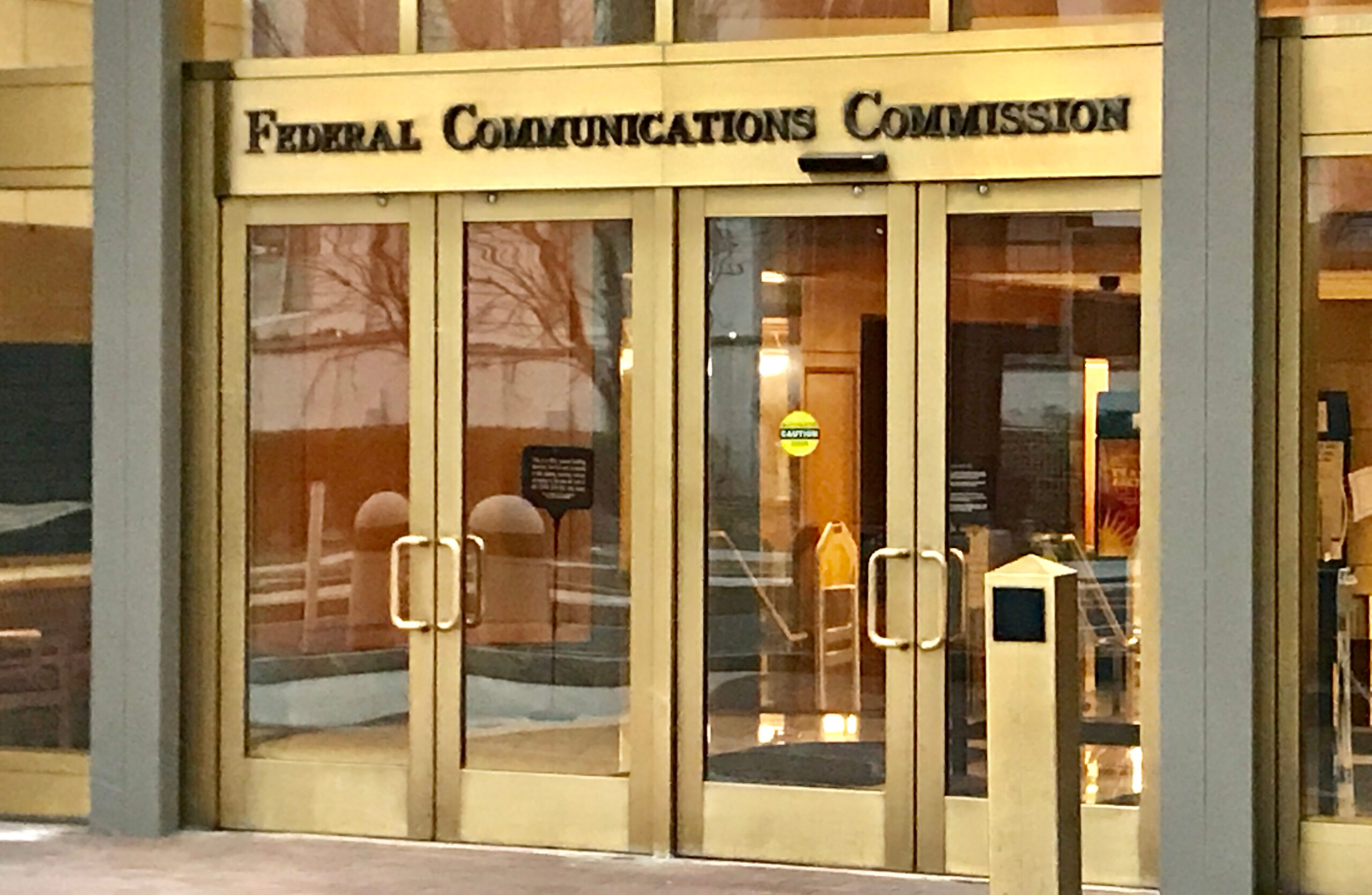
While the responsibility for PNT policy and leadership in the U.S. nominally lies with a committee co-chaired by the Department of Defense and Department of Transportation, the government body most vocal and engaged with the public on PNT issues of late has been the FCC. At first glance, this might seem a non-sequitur. The FCC is an independent agency (i.e. not part of the executive branch) and is tasked with regulating the nation’s use of spectrum.
Yet the commission has been engaged in PNT issues before. Most notably, the long running and still-contentious Lightsquared-Ligado controversy. Lightsquared, and then its successor Ligado, petitioned the FCC for the right to transmit on frequencies adjacent to those used by GPS. Despite strenuous objections from the executive branch, including vociferous opposition from Defense and Transportation, that this would deny or degrade GPS reception for many users, the commission approved the request in 2020. And despite seven petitions for reconsideration filed that year, a subsequent National Academy of Sciences report affirming interference concerns, and Ligado filing for bankruptcy, the commission’s decision still stands.
According to former Commissioner Nathan Simington, the FCC’s most recent engagement with PNT issues resulted from his long-standing concern that PNT is a huge national security issue and two pending petitions that seek to address that issue.
The first petition is from NextNav. It asks for approximately $5B worth of spectrum to be reallocated for its use. NextNav says it will use this spectrum to work with telecommunications companies and establish a 5G telecommunications-based PNT system.
The second petition is from the National Association of Broadcasters. It asks that the FCC establish a schedule for adoption of a new television broadcast format called ATSC 3.0. The new format brings a number of advantages, the group says, including the ability to include PNT signals.
This confluence of issues resulted in a 27-page Notice of Inquiry (NOI). At the FCC’s March 2025 public meeting Chairman Brendan Carr said about the NOI:
With this inquiry, we will explore other PNT systems that can be complements or alternatives to GPS, with an emphasis on complementary systems. Beyond answering technical questions, we hope this effort will engage stakeholders across government and industry to encourage the development of new PNT technologies and solutions.
Over 140 comments filling nearly 1,300 pages were filed to the docket during the fairly brief 47 day period allocated for comments and reply comments.*
Here are a few themes we found among all the responses:
America needs a more resilient system of systems PNT – There was near universal agreement with the FCC’s conclusion that the nation’s PNT was in dire need of an upgrade. Most respondents said they appreciated the commission’s efforts. Many cited the need for a system-of-systems approach discussing it as “multi-layered,” “diversified,” and a “PNT fabric,” or by citing the need for a variety of diverse sources such as terrestrial broadcast, fiber, and space-based systems used in combination.
Endorsements of Terrestrial broadcast PNT – The next most frequent comments were positive mentions of terrestrial broadcast systems. The National Association of Broadcasters’ Broadcast Positioning System (BPS), also described as “ATSC 3.0,” received the most mentions, and eLoran was cited a dozen times. A very few concerns were expressed about the cost impact of mandating ATSC 3.0 on independent television stations.
Referendum on NextNav’s petition – While the commission is still considering NextNav’s petition in another docket, many of the respondents saw the NOI as another opportunity to comment on that proposal. More than two dozen commenters (over half of which were industry associations) urged the FCC to deny NextNav’s petition. Another five cautioned against actions that would impact existing spectrum users without specifically mentioning NextNav. Only three organizations that weren’t NextNav or one of their business partners urged the FCC to approve the request.
Space-based PNT – A significant number of respondents recommended better use of GNSS, implementation of LEO PNT, and/or other space-based assets without mentioning other systems.
Policy Issues – While the NOI asked about a number of interesting policy issues, most respondents focused their replies on technology. The most frequently mentioned policy issue was the desire to avoid regulatory mandates, with some of those comments tempered saying ‘no unnecessary mandates’.
What’s next?
The FCC has not given any indication of next steps with the information generated by the NOI. Whether or not it is incorporated into its calculus for the NextNav, NAB, or other petitions or decisions is entirely up to the Commission.
Former commissioner Simington argues that regardless of how the Chairman and Commission elect to proceed, the NOI was exceptionally important. The commission has always been a political body and remains one today. Public input like that provided through the NOI is exceptionally important in decisions that always have a significant political component.
*Our thanks to Khadija Abousalama, a graduate student at George Washington University’s Space Policy Institute, for compiling and analyzing the NOI responses. You can access the NOI responses from the FCC website at https://www.fcc.gov/ecfs/search/search-filings/results?q=%28proceedings.name%3A%28%2225-110%22%29%29&limit=5&sort=date_received,DESC&page=24 and her summaries of them at https://rntfnd.org/wp-content/uploads/NOI-Summary-Matrix_PNT_NOI_25-110-24-Jun_v2.xlsx
READ AT INSIDE GNSS STARTING ON PAGE 18 IN JULY/AUG 2025 EDITION