



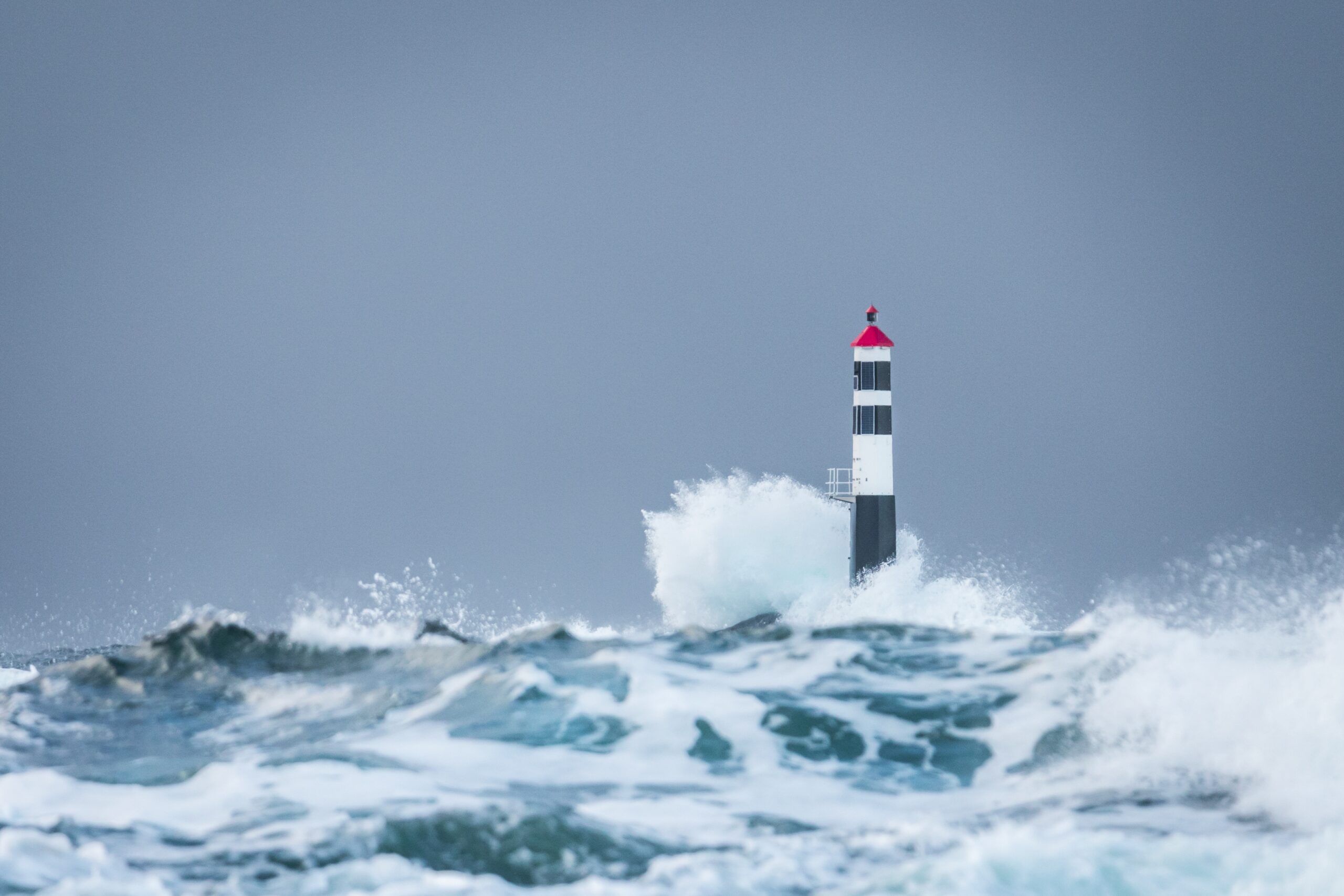
Image: Norway’s Kraka Lighthouse Shutterstock
What’s new: An interesting article that demonstrates the continuing need for visual navigation aids.
Why it’s important:
- Visual aids to navigation will continue to be used regardless of the amount of IT and electronic aids that become available. We can’t imagine driving a highway without road signs, for example.
- Every operational navigation system must be well maintained. If it is not, then it becomes a danger, creating confusion and doubt, rather than adding to a navigator’s safety.
What else to know:
- “The prudent mariner uses all appropriate means to determine their position…”

A Voyage to Bring Norway’s Lighthouses Into the 21st Century
More than 2,000 navigational beacons, big and small, oversee the nation’s 60,000-mile-long coast. Now they need an upgrade.
If ever there was a beacon of hope, it is the lighthouse — “immovable, immortal, eminent,” as the novelist (and son of a lighthouse designer) Robert Louis Stevenson put it. The oldest lighthouse still in use, built in Galicia by the Romans, dates to A.D. 100.
“I can think of no other edifice constructed by man as altruistic as a lighthouse,” George Bernard Shaw once wrote. “They were built only to serve.”
The lighthouse hit its peak in the mid-20th century, before radio, radar and global-positioning satellites made ship navigation nearly inch-precise. In Norway today, all the lighthouses are now unmanned and automated.
But they remain essential to mariners as a visual backup — in case the fancy electronics fail or are scrambled by Russia’s military — and to small boats that lack the proper technology.