




Image: Shutterstock AI
What’s new: The U.S. Department of Defense’s Fortress America program seems like a great fit for a project to establish an national resilient PNT architecture. After we wrote the below item for Inside GNSS, a senior DOD official was quoted in Breaking Defense as saying the project would include “ground-based GPS.”
Why it’s important: The U.S. has been at a strategic disadvantage compared to China and Russia as they have terrestrial complements and backups for GNSS and we don’t. See NSSA paper here.
What else to know:
- Assistant Secretary of Defense for Energy, Installations, and Environment Dale Marks told Breaking Defense “Fortress America mandates that our primary operational platforms operate within a contested, by design, electromagnetic environment for deploying ground-based GPS, subterranean inertial reference networks, and direct optical laser trunk lines. If every commercial communication cell line in low Earth orbit is blinded tomorrow, our commanders will still see the battle space.”
- There are lots of questions to be answered:
- Will new PNT services/ assets be just for “operational platforms”?
- What about infrastructure?
- Will the system(s) be dual-use civil & military? Or just for DOD and/or government?
- Marks also mentioned public-private-partnerships. Will the PNT systems and services be via PPP?
- Will this program/project really happen?

FORTRESS America: Will PNT Resilience Become a Pentagon Priority?
On September 30, Defense Secretary Pete Hegseth announced FORTRESS America, a new initiative intended to strengthen the nation’s ability to sustain military operations despite disruptions to critical infrastructure, supply chains and essential services.
For those concerned about America’s overdependence on GPS for positioning, navigation and timing (PNT), the initiative offers reason for optimism. More importantly, PNT resilience is explicitly identified as a priority in the Pentagon’s initial implementation guidance.
On October 6, Under Secretary of Defense for Acquisition and Sustainment Michael Duffey issued a memorandum establishing the initial framework for FORTRESS America and designated Richard “Matt” O’Malley as interim director of the program office.
The initiative is organized around five pillars: space and spectrum resilience, installation hardening and cyber resilience, energy independence, supply chain and defense industrial base resilience, and strategic defense reserves.
Resilient PNT has an important role in several of these areas, particularly three.
Space and spectrum resilience
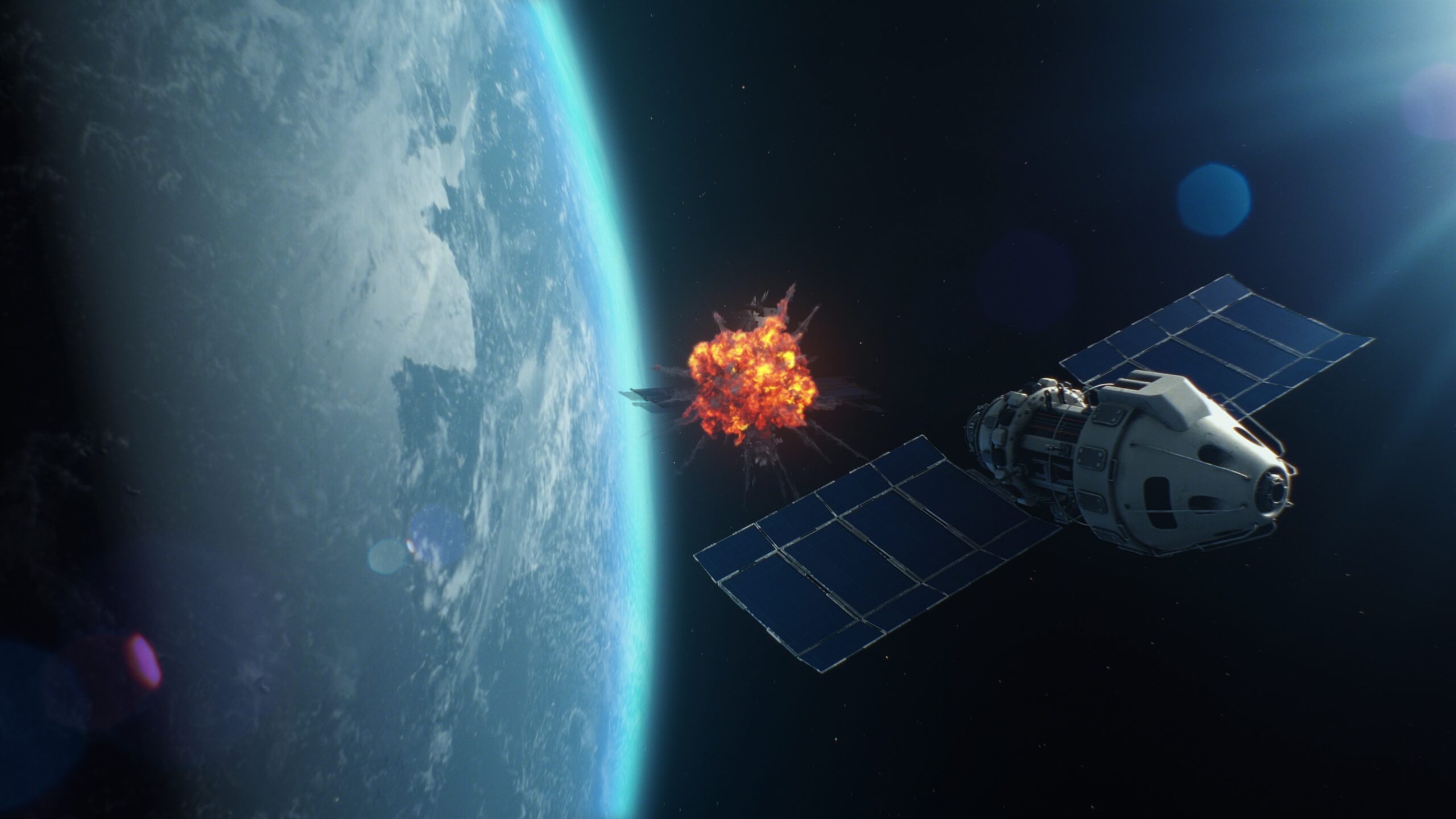
This is the clearest and most direct connection. Duffey’s memorandum specifically calls for “boosting positioning, navigation, and timing resilience” alongside hardening satellite links and integrating electronic protection to counter adversary interference.
The language acknowledges that assured PNT is fundamental to military operations in contested electromagnetic environments. The question is whether this recognition will translate into accelerated deployment of complementary PNT capabilities that reduce dependence on GPS alone.
Installation hardening and cyber resilience
Military installations depend on accurate positioning and timing for communications, network synchronization, security systems and operational coordination. GPS interference, spoofing and the manipulation of timing information can compromise these functions even when the underlying infrastructure remains intact.
Protecting installations against cyberattack and other disruptions therefore requires attention not only to physical and digital security, but also to the reliability of the PNT services on which critical systems depend.
Energy independence
FORTRESS America places particular emphasis on ensuring that military installations can operate independently of vulnerable civilian power grids.
But energy resilience also depends on reliable timing and synchronization. Electrical distribution networks, microgrids and associated control systems require dependable timing references to coordinate operations, maintain stability and respond to faults.
Developing independent power generation without addressing dependencies on external timing services would leave an important vulnerability unresolved.
PNT resilience also supports the initiative’s broader supply-chain and industrial objectives, particularly transportation, logistics and the movement of critical materiel. However, those connections are less explicit in the current implementation guidance.
From recognition to implementation
The inclusion of PNT resilience in FORTRESS America’s initial directive is encouraging. But the distinction between recognizing a vulnerability and correcting it is significant.
The Department of Defense already has multiple efforts underway to improve assured PNT, including military GPS modernization and the development of alternative navigation and timing capabilities.
Will FORTRESS America accelerate these initiatives, establish more comprehensive requirements, or support an integrated architecture incorporating space-based, terrestrial and other complementary PNT technologies?
Those questions remain unanswered.
The initiative could also provide an opportunity to address a broader national challenge: establishing a resilient core PNT architecture that supports critical infrastructure as well as military operations.
FORTRESS America is still in its early stages, and its ultimate scope, funding and implementation priorities have yet to be fully defined.
Nevertheless, the Pentagon’s explicit recognition of PNT resilience is a positive development. The real measure of success will be whether that recognition produces funded programs, fielded capabilities and demonstrably reduced dependence on GPS as a single point of failure.
A resilient homeland requires resilient PNT.

Pentagon eyes ‘public-private partnerships’ to help fund FORTRESS America homeland base plan
“The model that we’re trying to drive on is not me having to go back up on Capitol Hill with my hand out,” Assistant Secretary of Defense for Energy, Installations, and Environment Dale Marks told Breaking Defense.
The fifth and final FORTRESS pillar the Pentagon is pursuing revolves around space inspector resilience and making sure the US can still use its weapons if adversaries are using anti-satellite, terrestrial jamming, or electronic warfare weapons.
“Fortress America mandates that our primary operational platforms operate within a contested, by design, electromagnetic environment for deploying ground-based GPS, subterranean inertial reference networks, and direct optical laser trunk lines,” Marks said. “If every commercial communication cell line in low Earth orbit is blinded tomorrow, our commanders will still see the battle space.”