



Image: Todd Humphreys
What’s new: Interesting slides from Todd Humphreys’ presentation at the Munich Space Summit.
Why it’s important:
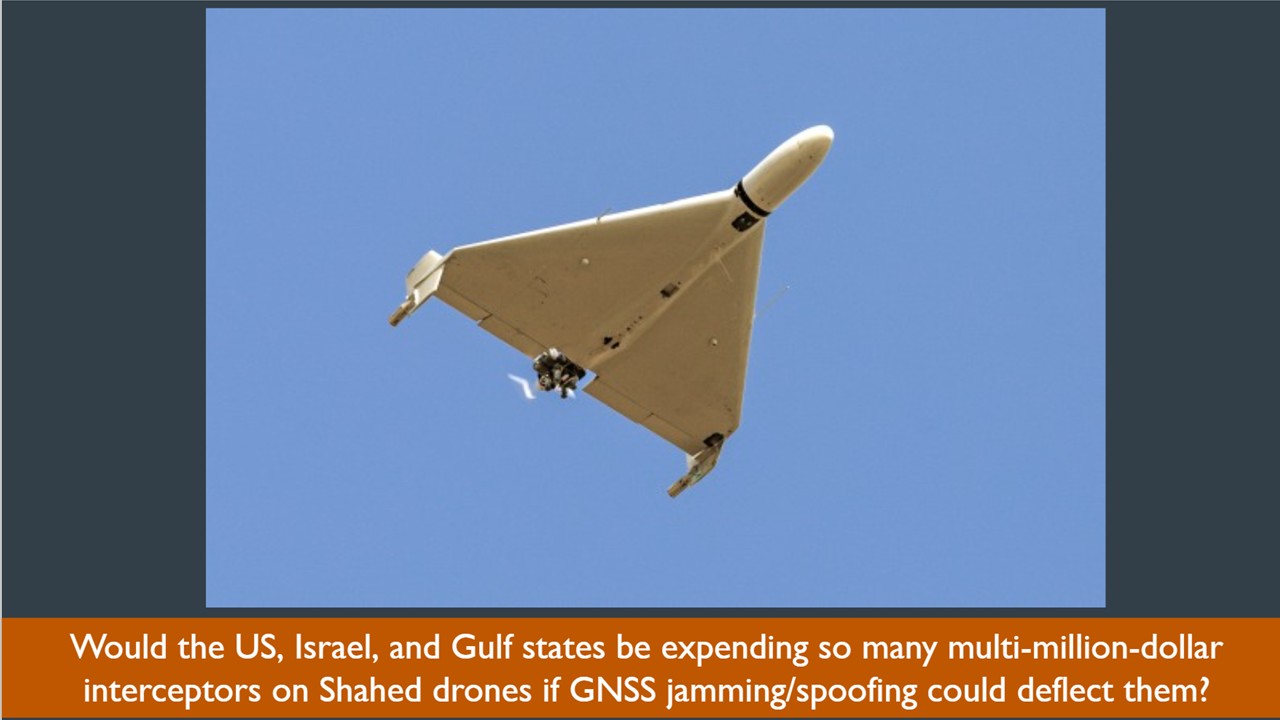
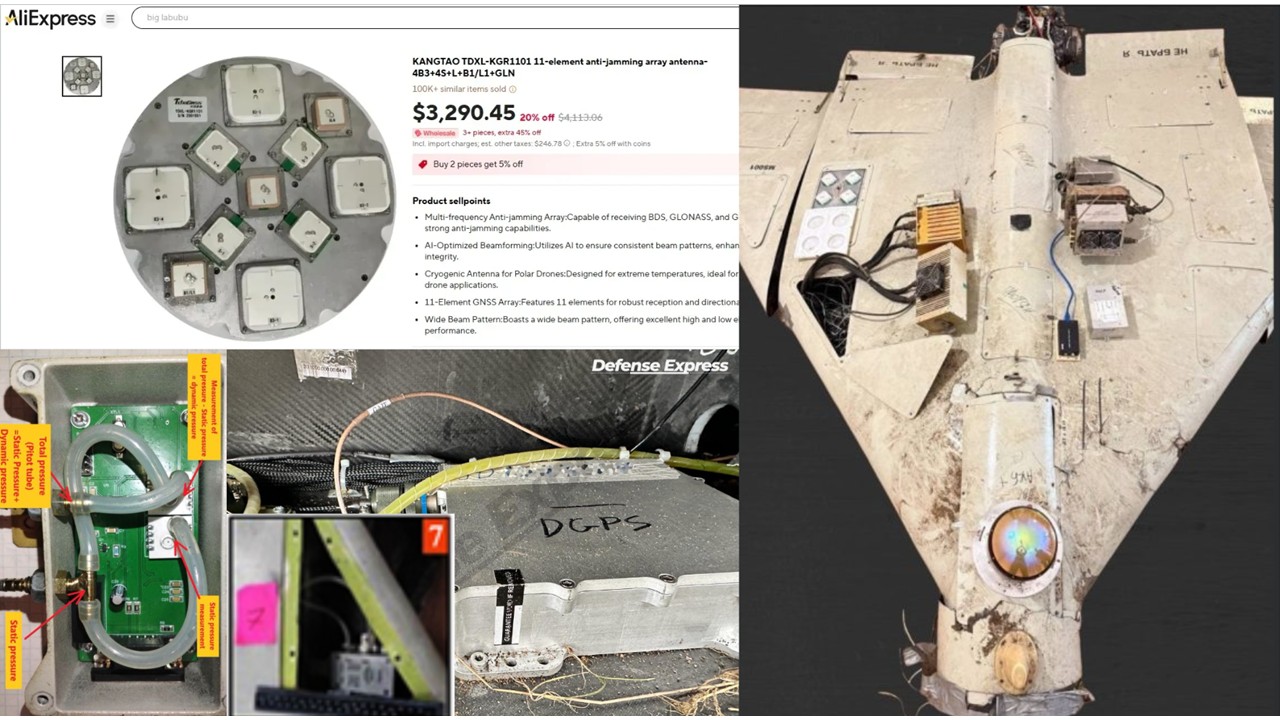
- He shows that drones can be much more resilient to GNSS interference, if the
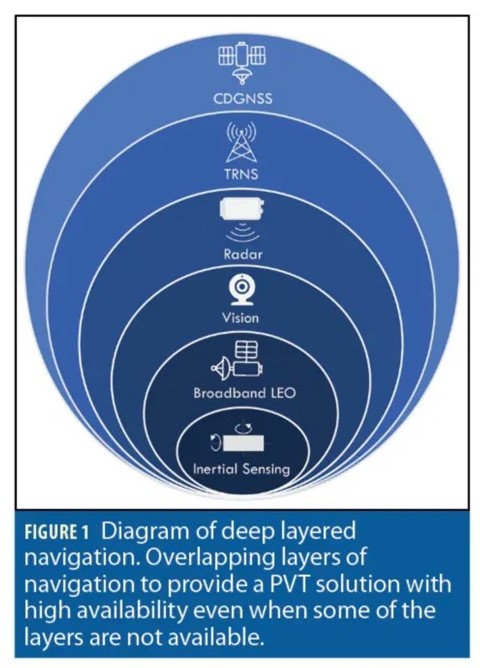 operator is willing to spend some money and effort.
 - It is another example of asymmetric capabilities in a conflict. Another way a smaller country can “punch above its weight” when up against a much larger one.
- It is also a great example of Todd’s layered navigation approach about which we have previously posted. See “99.9% Not Good Enough for Urban Drones.”
What else to know:
- As UAV technologies and systems develop, we will be interested to see how the tradeoff between the costs of resilient user equipment and resilient signals (which require infrastructure) are traded off. For example, should all drone operators have to spend $3,000+ for navigation equipment, or would it be better for a nation to spend $100M for infrastructure to drive the user cost down to a few dollars? – Numbers suggested for illustration purposes only.
- Prof. Todd Humphreys is a member of and advisor to the RNT Foundation.
Slides: Prof Todd Humphreys