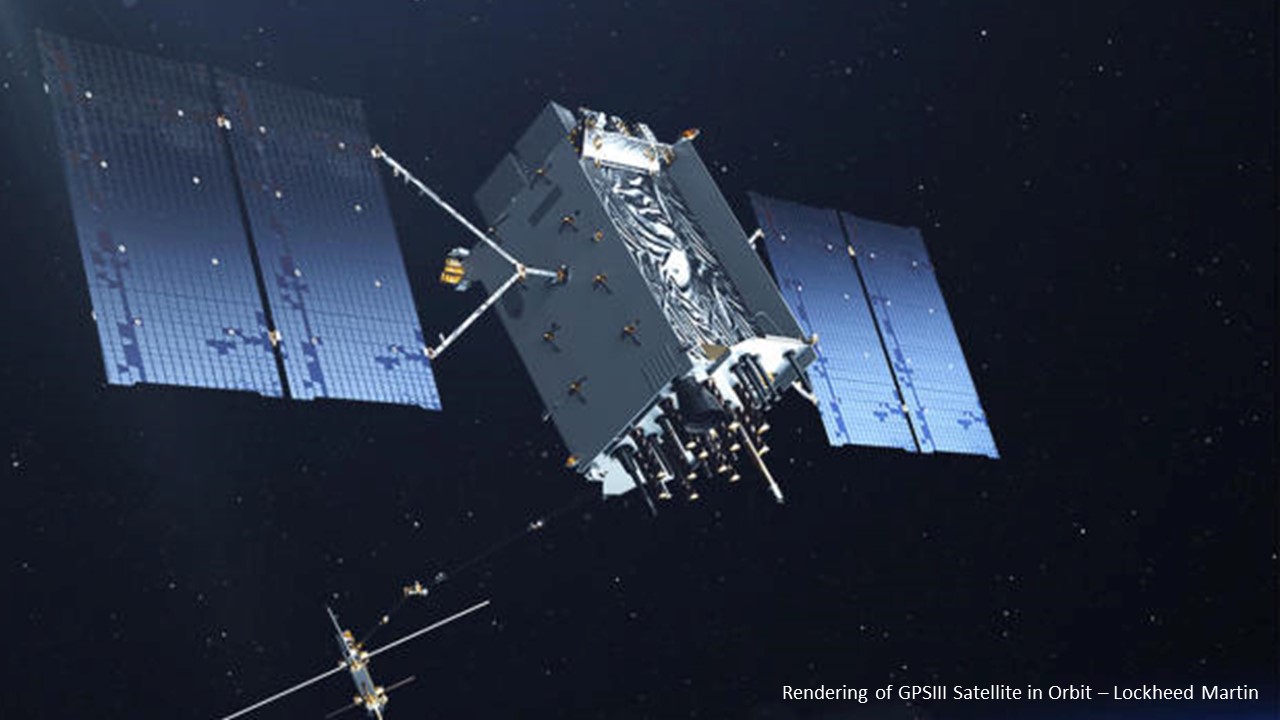




What’s new:Space Development Agency seems to be backing off its plans for LEO PNT.
Why it’s important:
This could signal SDA and DOD de-emphasizing PNT overall. Note that Space Force’s R-GPS is not yet a program.
On the other hand, the “D” in SDA stands for “development.” This announcement could be a recognition by SDA that LEO PNT is already being done by others, including commercial interests. For example, RNT Foundation members Trustpoint and Xona are well on their ways to establishing constellations. So, perhaps there is no need for SDA to develop something also.
What else to know:LEO PNT is an increasingly popular pursuit. We have lost count of the number of government and commercial initiatives around the world. Just yesterday, for example, we saw an announcement by a company in India that they will establish a service.

Space Development Agency pauses plans to provide PNT capabilities
SDA was looking to build out PNT capabilities in the Tranche 3 transport layer of the Proliferated Warfighter Space Architecture, which the Department of the Air Force is considering canceling.
NATIONAL HARBOR, Md. — The Space Development Agency is reconsidering whether or not it will further develop position, navigation and timing (PNT) capabilities as part of its mega-constellation of satellites in low-Earth orbit.
SDA was looking to build out additional PNT capacity in the Tranche 3 transport layer of the Proliferated Warfighter Space Architecture (PWSA) — which will comprise hundreds of satellites providing data relay and missile warning and tracking capabilities to warfighters. But because the agency did not include funding for the Tranche 3 transport layer in its budget request for fiscal 2026, its plans to flesh out PNT in future PWSA tranches are effectively on hold.
PNT is the quiet backbone of everything but too many leaders still don’t see the risk.
But you do. You understand the systems, the dependencies, the failure chains. That insight is rare — and it’s exactly what your country needs right now. Contact your government leaders and industry decision-makers and tell them resilient PNT isn’t a feature — it’s the foundation everything else depends on.
Image: Ship fire after collision during GPS disruption - Singapore Maritime Security Agency What's new: A discussion of the importance of GPS/GNSS to maritime - especially in ports. This is the first discussion of its type we have seen. Why it's important: Safety:...
Image: Hidden TTY on Reddit What's new: Starlink announced it will no longer allow users to access location information on their terminals. Why it's important: Some users were able to use that information to navigate in GNSS denied environments. What else to know:...
Image: DOT Volpe Center What's new: The John A. Volpe National Transportation Center in Cambridge, MA, is seeking a Director to lead the Center for Infrastructure Systems and Technology within the Office of the Assistant Secretary for Research and Technology (OST-R)....
Image: Youtube - Fatal Azerbaijan Air crash after being shot at by Russian forces due to GPS jamming and no ADS-B identification What's new: The Secretary General of the International Civil Aviation Organization addressed the World Overflight Risk Conference in...
Image: Copilot AI What's new: We understand the UK Ministry of Defence (MOD) recently awarded a contract to a UK-led team to create a deployable PNT solution based on eLoran to be delivered over the next two years. The intent is that, once delivered, the system can be...