



Image: Shutterstock
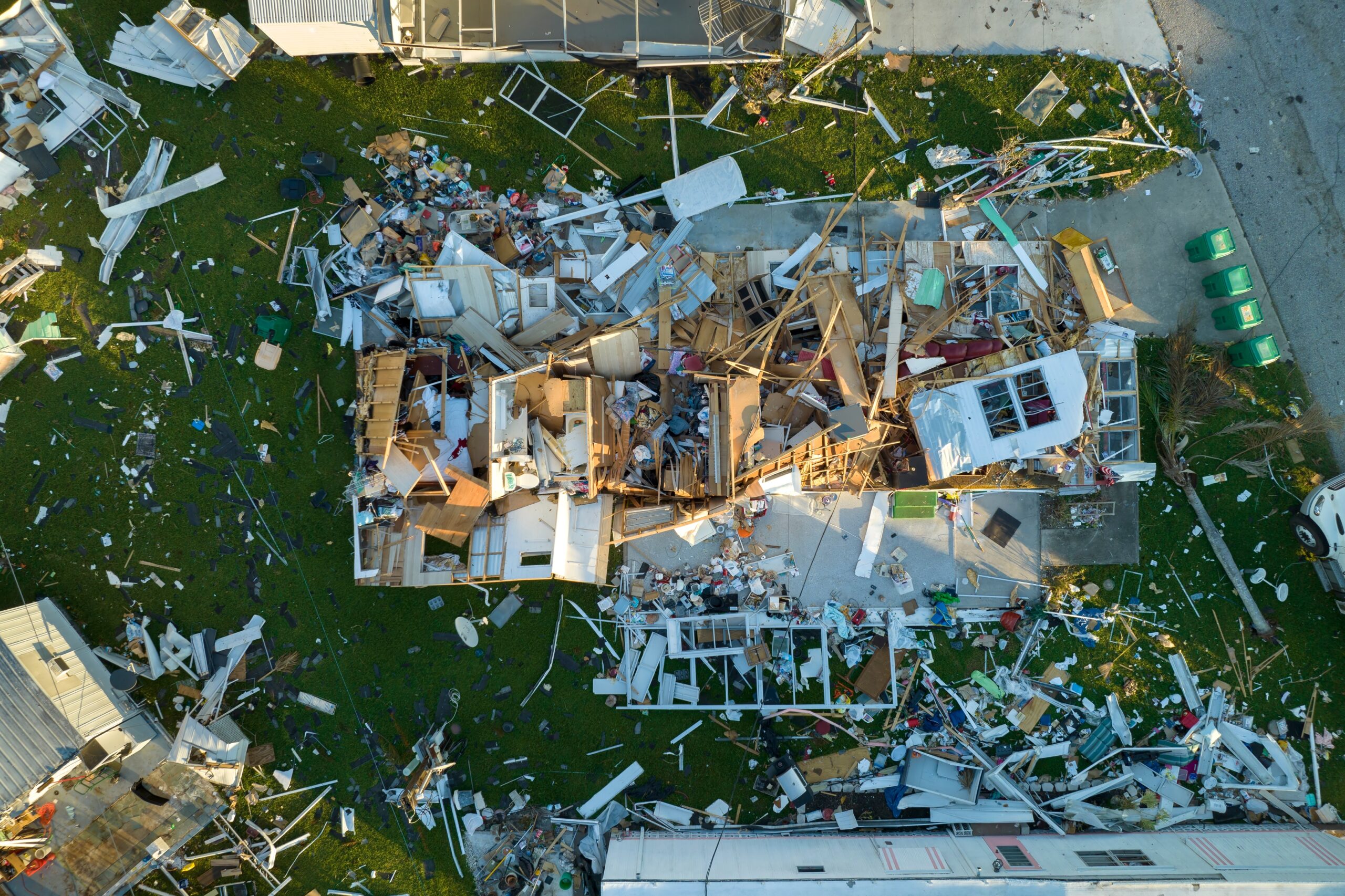
What’s New: A reminder that, even when electrical service is down, cell towers are out, and everything seems to be going wrong, America’s GPS becomes even more important. If that is at all possible.
Why It’s Important:
- Search and rescue, recovery and restoration, first responder radios, common operating pictures, virtually every aspect of storm-related operations, all are supported and enabled by GPS.
- GPS is essential to virtually every technology, Once systems are started backup. It is used for time, timing, and location reference.
What Else to Know:
- For more on GPS and emergency services, see this article by Lisa Dyer of the GPS Innovation Alliance in GPS World.
- We regularly discuss threats and vulnerabilities for GPS, and that additional policies and systems are needed. All because GPS and PNT are invaluable and need the most attention and protection we can provide.
Public Safety and Disaster Relief
A critical component of any successful rescue operation is time. Knowing the precise location of landmarks, streets, buildings, emergency service resources, and disaster relief sites reduces that time — and saves lives. This information is critical to disaster relief teams and public safety personnel in order to protect life and reduce property loss. The Global Positioning System serves as a facilitating technology in addressing these needs.
GPS has played a vital role in relief efforts for global disasters such as the tsunami that struck in the Indian Ocean region in 2004, Hurricanes Katrina and Rita that wreaked havoc in the Gulf of Mexico in 2005, and the Pakistan-India earthquake in 2005. Search and rescue teams used GPS, geographic information system (GIS), and remote sensing technology to create maps of the disaster areas for rescue and aid operations, as well as to assess damage.
Another important area of disaster relief is in the management of wildfires. To contain and manage forest fires, aircraft combine GPS with infrared scanners to identify fire boundaries and “hot spots.” Within minutes, fire maps are transmitted to a portable field computer at the firefighters’ camp. Armed with this information, firefighters have a greater chance of winning the battle against the blaze.
In earthquake prone areas such as the Pacific Rim, GPS is playing an increasingly prominent role in helping scientists to anticipate earthquakes. Using the precise position information provided by GPS, scientists can study how strain builds up slowly over time in an attempt to characterize, and in the future perhaps anticipate, earthquakes.
“The data from the Southern California Integrated GPS Network will allow us to anticipate future earthquakes with more accuracy, as well as to study in much greater detail the fundamental processes of crustal deformation that are the root causes of earthquakes,” said Dr. Thomas Jordan, Director Designate, Southern California Earthquake Center.
Meteorologists responsible for storm tracking and flood prediction also rely on GPS. They can assess water vapor content by analyzing transmissions of GPS data through the atmosphere.
GPS has become an integral part of modern emergency response systems — whether helping stranded motorists find assistance or guiding emergency vehicles.
As the international industry positioning standard for use by emergency and other specialty vehicle fleets, GPS has given managers a quantum leap forward in efficient operation of their emergency response teams. The ability to effectively identify and view the location of police, fire, rescue, and individual vehicles or boats, and how their location relates to an entire network of transportation systems in a geographic area, has resulted in a whole new way of doing business. Location information provided by GPS, coupled with automation, reduces delay in the dispatch of emergency services.
Incorporation of GPS in mobile phones places an emergency location capability in the hands of everyday users. Today’s widespread placement of GPS location systems in passenger cars provides another leap in developing a comprehensive safety net. Today, many ground and maritime vehicles are equipped with autonomous crash sensors and GPS. This information, when coupled with automatic communication systems, enables a call for help even when occupants are unable to do so.
The modernization of GPS will further facilitate disaster relief and public safety services. The addition of new civil signals have increased accuracy and reliability all over the world. In short, GPS modernization translates to more lives saved and faster recovery for victims of global tragedies.
Benefits
– Deliver disaster relief to areas in a more timely and accurate manner, saving lives and restoring critical infrastructure.
– Provide position information for mapping of disaster regions where little or no mapping information is available.
– Enhance capability for flood prediction and monitoring of seismic precursors and events.
– Provide positional information about individuals with mobile phones and in vehicles in case of emergency.
Operated by Air Force Space Command’s 50th Space Wing at Schriever Air Force Base, located east of Colorado Springs, Colo., the GPS constellation provides precise positioning, navigation and timing services worldwide as a free service provided by the U.S. Air Force, seven days a week, 24 hours a day. The GPS constellation is healthy, stable and robust with 12 GPS IIRs, seven GPS IIR-Ms, and 12 GPS IIF satellites on orbit providing precise global positioning, navigation, and timing services to users around the globe.
The latest generation of GPS IIF satellites provides improved signals to support both the warfighter and the growing civilian needs of a global economy. Featuring a new third civil signal — L5 — that benefits commercial aviation and safety-of-life applications, the GPS IIF series provides improved accuracy through advanced atomic clocks, and a longer design life than previous GPS satellites on orbit.
The Space and Missile Systems Center, located at Los Angeles Air Force Base in El Segundo, Calif., is the Air Force’s center of acquisition excellence for acquiring and developing military space systems. Its portfolio includes the Global Positioning System, military satellite communications, defense meteorological satellites, space launch and range systems, satellite control networks, space based infrared systems and space situational awareness capabilities.