



Image: CAPT James Haley
What’s new: A rare spoofing event in the continental USA.
Why it’s important: It shows no one is safe anywhere. Also that not all spoofing is malicious (but it is always dangerous).
What else to know:
- CAPT Haley did most of the work for this piece. Well done, Captain!
- The captain and UHU are members and supporters of the RNT Foundation.

LA/Long Beach VTIS Records Spoofing Event in January 2026 GPS Test Window
A recent spoofing and jamming incident at the LA/Long Beach VTIS shows this growing threat isn’t just a problem in conflict zones.
It’s late at night, January 29, 2026. Most of Southern California is asleep. Ships approaching Long Beach harbor from the West key their mics on VHF channel 14 and report GNSS outages to LA/Long Beach Vessel Traffic Service (VTIS). Aircraft over the Channel Islands squawk the same via ADS-B. NOAA Continuously Operating Reference Station (CORS) sites record anomalies in L1 and L2 signal-to-noise ratios. All of this within an hour.
While spoofing and jamming of GNSS have been recurring issues in conflict zones, incidents like this show no one is immune.
Maritime Impacts
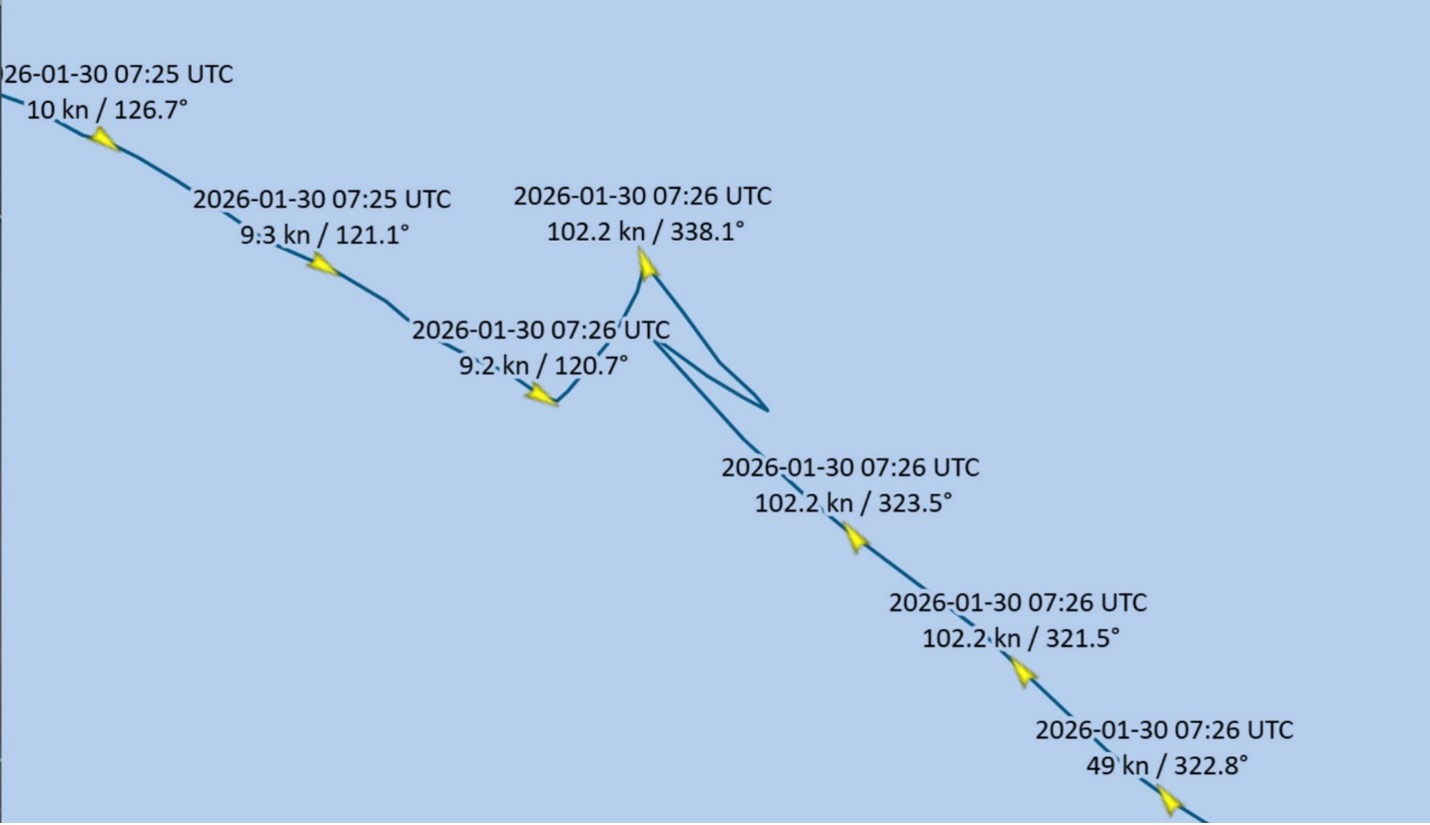
Automatic Identification System (AIS) reports from at least 7 vessels indicate position jumps indicative of spoofing. At least one vessel’s AIS system ceased transmitting altogether for nearly an hour, likely due to an invalid GNSS solution. Data indicates this event covered greater than a 100-mile area, including the critical LA/Long Beach Traffic Separation Scheme.
All of the documented GNSS anomalies occurred within one hour, but the most dramatic position jumps shown by AIS messages lasted only several minutes. The short duration of the event is the only factor that prevented greater impact on PNT and limited public awareness of the event.
All of the reported interference occurred between 11 p.m. and midnight local time, with good visibility and no inclement weather, and all the vessels involved entered port without incident. But, it should be noted that several of the vessels were navigating in close proximity to one another in the vessel traffic separation scheme, and loss of valid GNSS solution could impact situational awareness and create distraction at a critical point in their voyages.
Figure 2 shows the AIS track of a large container ship showing position jumps resulting in invalid, erratic course and speed over ground: