



Image: Shutterstock
What’s new: An insightful commentary on the need for a systems approach to how our infrastructures are built and interact. 
Why it’s important: It reinforces that:
  • We build good things, but,
  • Need to be more thoughtful, especially about how things interact,
  • Someone should be looking at the big picture, taking a systems approach to national infrastructure, and
  • If not, we are standing into danger.

What else to know:  The author, Ronald Keen, is a former DHS official now with the Aerospace Corporation.

 

Critical infrastructure in the United States is not fragile because it’s poorly built. It’s fragile because we have not fully understood, assessed, and measured the dependencies that holds it together.

For more than a decade, we invested billions in technology upgrades, integrating “smart” systems, implementing cyber defenses, developing resilience plans, imposing sector-specific regulation, and conducting threat assessments. We audit compliance, harden perimeters, and run tabletop exercises. We reorganize agencies and create new programs. So why do cascading failures continue to surprise us?

Energy disruptions ripple into water systems. Communications outages paralyze logistics. Timing anomalies disrupt finance. Supply chain shocks spill across continents.
This is not coincidence. It is structural — and largely unmitigated.

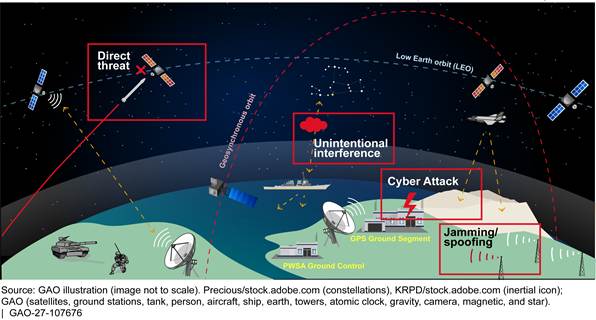
Modern critical infrastructure does not operate as the independent sectors we prefer to regulate. Commissions still handle water, energy, transportation, and communications as isolated utilities, while in reality they now function as a tightly coupled system-of-systems bound together by shared dependencies, many of which sit outside the direct control of the entities that rely on them. Space-based synchronization. Commercial satellite communications. Third-party data feeds. Globally concentrated manufacturing. Automated decision loops designed to assume continuity as a default condition.

We regulate sectors, and assess threats, yet we do not comprehensively map how dependency behaves under stress. We do not model how disruption propagates across that spiderweb once a chokepoint is pressured. We do not quantify how long cascading effects persist once redundancy is exhausted.

There lies the real vulnerability.

Infrastructure failure today rarely begins with a dramatic attack. More often, it begins with a broken dependency that was assumed, normalized, or never formally governed. Once that dependency is stressed by adversary action, natural event, technical failure, or geopolitical shock, the system does exactly what tightly coupled systems do.

It fails and cascades.

Adversaries understand this dynamic. They do not need to destroy infrastructure outright. They need only infiltrate the system, map the spiderweb, identify the right dependency, apply the right pressure, and allow the architecture of interconnection to amplify the effect without triggering attribution thresholds. Nature achieves the same outcome without intent. Is it happening right now? How can we know if we don’t understand the spiderweb?
If we are serious about national resilience, dependency can no longer be treated as an academic sidebar. It must become a first-order analytic discipline mapped, measured, stress-tested, and continuously reassessed across sectors and across the space-terrestrial boundary now defining modern infrastructure.
Republished from LinkedIn with permission of the author.
—–

What can you do? How can you help?

PNT is the quiet backbone of everything — power, finance, transportation, defense. Too many leaders still don’t see the risk.

But you do.
You understand the systems, the dependencies, the failure chains. That insight is rare — and it’s exactly what your country needs.

So speak up.
Reach out to government leaders, industry decision‑makers, and your fellow citizens.
Show them why resilient PNT isn’t a feature — it’s the necessary foundation.
And when you get a response, tell us. Every conversation strengthens the mission.