



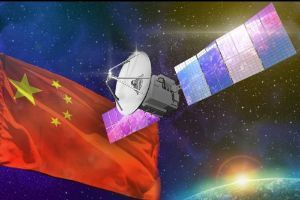
Image: Shutterstock
What’s new: A reminder of how the U.S. has fallen behind China with GPS compared to Bei Dou.
- Bei Dou satellites are newer and have more capability
- Bei Dou has 56 satellites vs 31 for GPS
- Bei Dou has 120 ground stations vs 11 for GPS
Why its important:
- It makes Bei Dou more attractive to users than GPS and reinforces China’s belt and road initiative along with other efforts to displace the U.S. on the world stage. See Harvard paper here.
- Perhaps it is another sign the U.S. is not paying attention to national PNT capability and/or maintaining tech leadership.
What else to know:
- Bei Dou likely has the ability to do more. See this item in SpaceNews about software defined transmitters and spoofing from space.
- China also has the ability to withstand disruption of space-based PNT far better than the U.S. It has taken a comprehensive approach. A 20,000km network of fiber with 294 timing stations and a national eLoran system are integrated with its space-based PNT assets. It is difficult to see how China’s overall PNT service could be disrupted. Just the opposite of the apparent situation in the U.S.

Technology Mobile
China’s Advanced GPS Alternative Isn’t Just For Navigation
By Elias Nash Feb. 9, 2026 12:17 pm EST
The term “GPS” has become ubiquitous in American life. You know it as the foundational technology of navigation apps like Google Maps and Waze, but in most of the world, GPS is just a meaningless trio of letters. The Global Positioning System is owned and operated by the U.S. military, and it is just one of many Global Navigation Satellite Systems (GNSS) in operation around the world. In the European Union, people find their way with help from a GNSS called Galileo. In Russia, they use GLONASS (GLObal NAvigation Satellite System). Japan has QZSS (Quasi-Zenith Satellite System), commonly known as Michibiki. But there’s one system that matters more than people realize: China’s BeiDou isn’t just a GPS alternative, it’s a fast-growing platform with uses that go far beyond navigation.
____
What can you do? How can you help?
PNT is the quiet backbone of everything that works — power, finance, transportation, defense. Too many leaders still don’t see the risk.
But you do.
You understand the systems, the dependencies, the failure chains. That insight is rare — and it’s exactly what your country needs.
So speak up.
Reach out to government leaders, industry decision‑makers, and your fellow citizens.
Show them why resilient PNT isn’t a feature — it’s the necessary foundation.
And when you get a response, tell us. Every conversation strengthens the mission.