



Image: Spirent
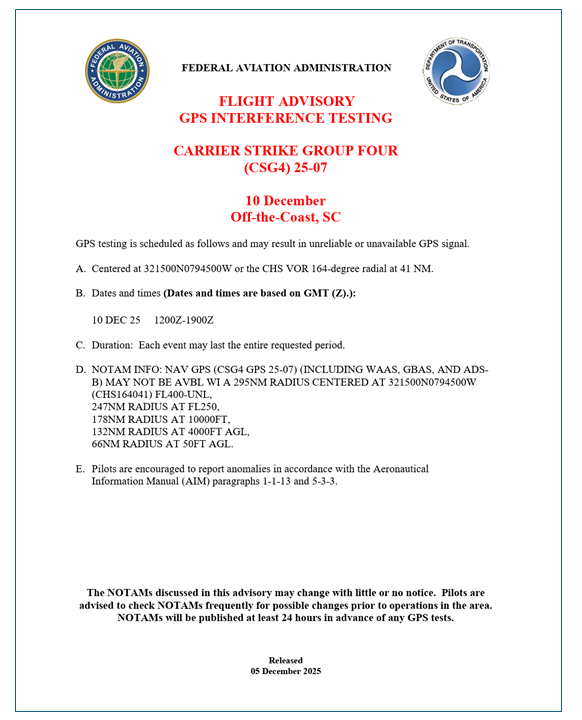
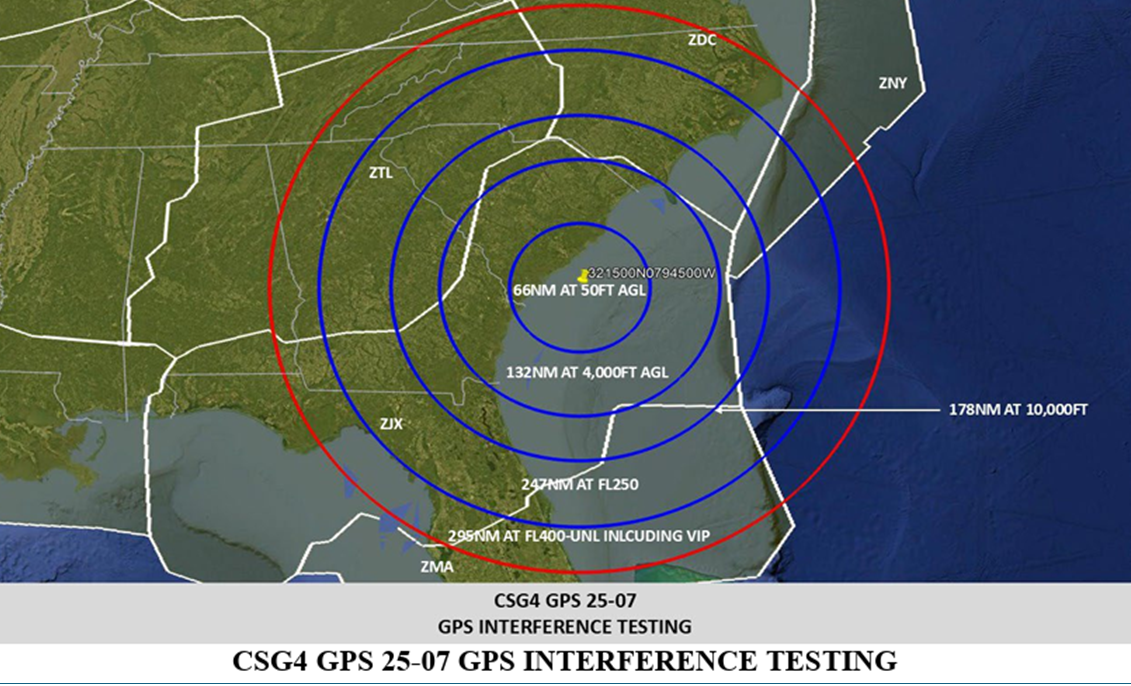
What’s new: An American Airlines and an Air Canada aircraft were spoofed off the coast of the Carolinas yesterday. This was apparently due to previously announced military testing.
Why it’s important:
- Testing is essential and the military makes every effort to notify users and minimize its impact. At the same time, GPS is widely used and, despite these efforts, impacts can be felt.
- There has long been tension between users, like commercial aviation, and military testing.
- Even when pilots are aware of GPS being unreliable, cockpit workload still increases above normal and many cockpit system can be impacted. Which systems depends upon the make, model, and configuration of the aircraft.
What else to know:
- We did a quick check in the area and did not see any impacts to ship GPS/AIS tracks. There may have been some, but we didn’t see them in our quick look. Since signals are line-of-sight aviation being impacted but not maritime is understandable.
- Thanks to Jeremy Bennington of RNT Foundation member Spirent for his LinkedIn post about the aviation impacts.

Jeremy Bennington
As NOTAMd (notice to air missions) by the US gov’t there has been GPS interference off the coast of North and South Carolina today. Without going into the techniques we detected, we can see that Boeing and Airbus aircraft were similarly impacted. Their GPS/ADSB position jumps around. Unlike other interference techniques we see elsewhere in this case the aircraft’s systems were able to determine something was wrong with the GPS and declare a low integrity to inform the pilots/controllers. That’s not always the case.