



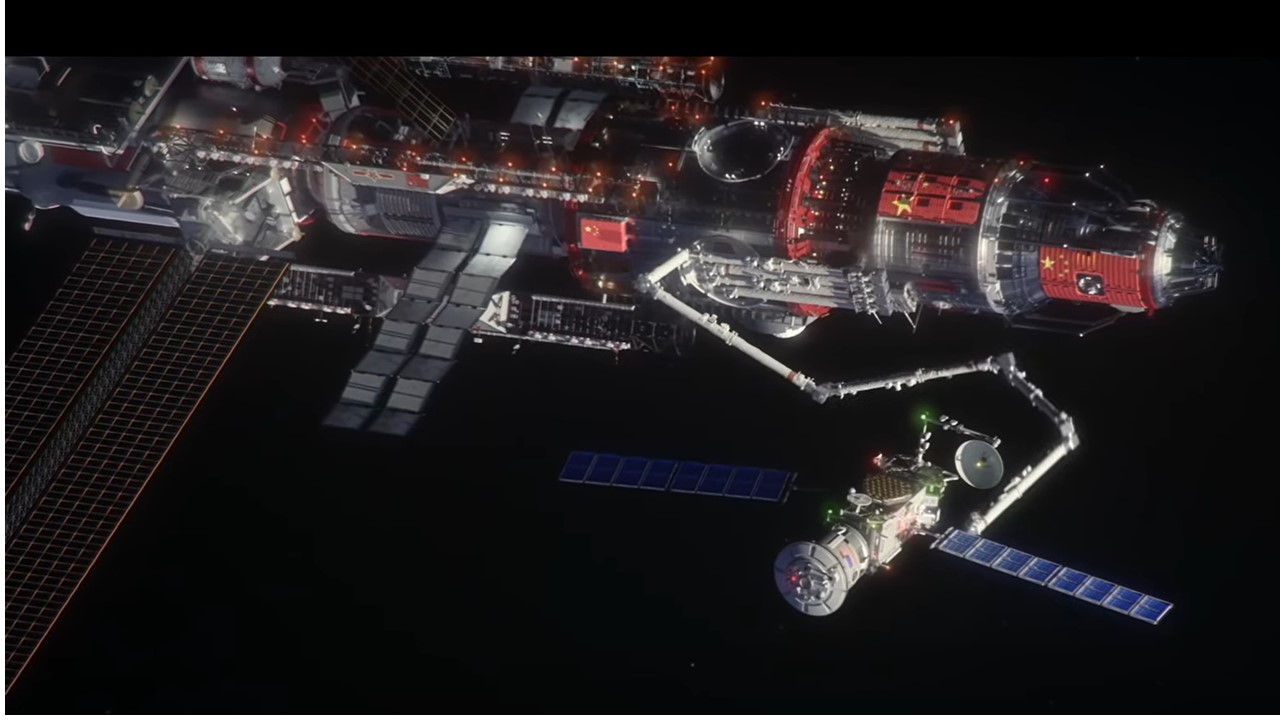
Image: “Space Force” TV series via YouTube
What’s new: The Secure World Foundation has released its annual “Global Counterspace Capabilities” report. It has loads of new info and updates. Things like info on Iran’s Hoda local positioning system (we have seen pictures of the transmitters and they look like Loran equipment, and Russia’s Cosmos 2576 which likely a counterspace weapon. There is so much new info that it takes seven pages for them to summarize it all!
Why it’s important: The report isn’t just about satellites. It also discusses signals and EW at length. GPS and GNSS, the threats and examples of interference are extensively documented.
What else to know: We think space would be a lot more secure if the US didn’t over-depend upon it so much (especially GPS). Putting all (or most) or your eggs in one basket is just asking for trouble.

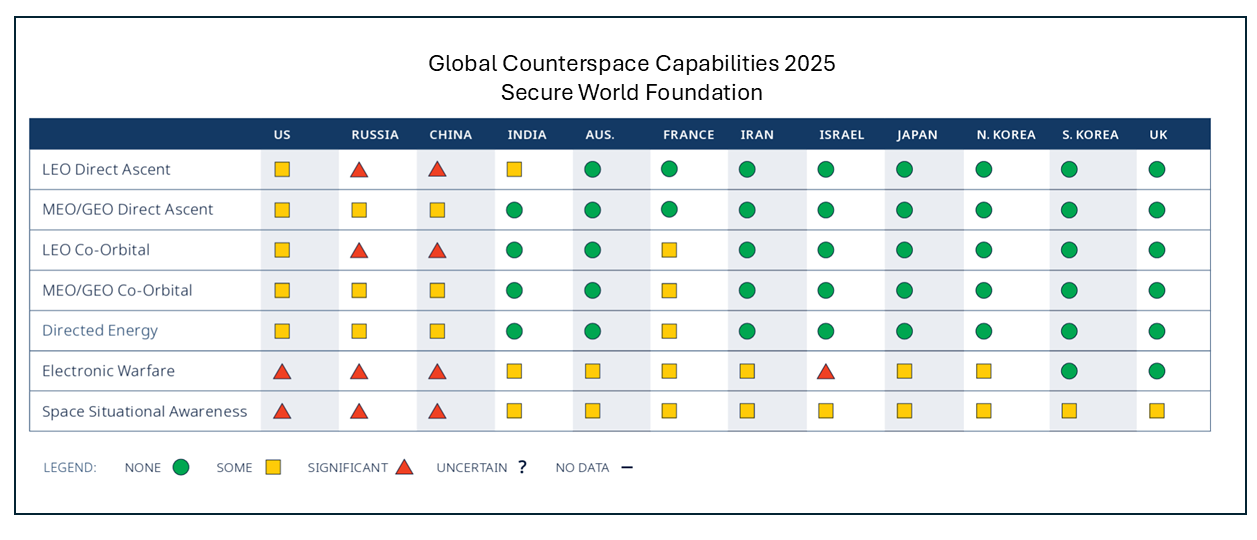
From the Secure World Foundation announcement:
The 2025 edition of the report assesses the current and near-term future capabilities for each country, along with their potential military utility. Countries covered in this report are divided up into those who have conducted debris-causing anti-satellite tests (the United States, Russia, China, India) and those who are developing counterspace technologies (Australia, France, Japan, Iran, Israel, North Korea, South Korea, and the United Kingdom). It covers events and activities through February 2025.
Major Updates in 2025:
- The 2025 edition documents the continued development of counterspace capabilities by 12 countries. While we see proliferation of R&D into counterspace capabilities, only non-destructive counterspace capabilities are being used in active military conflicts.
- This report goes into detail on 5 Chinese sats conducting RPOs throughout 2024, as recently discussed by USSF officials; it also documents other proximity operations conducted by the United States (GSSAP, PAN, MENTOR, LDPE-3A) and Russia (Luch and Luch 2).
- The United States now has at least one offensive counterspace system deployed – the CCS – and is believed to have a second one also deployed – the RMT system; these are both jammers. This report also describes a recent shift by the United States in speaking about offensive counterspace/space fires, including the acknowledgement by the United States that it is working on offensive counterspace capabilities that it describes as “low-debris-causing”.
- Russia’s GPS jamming is having increasing impacts on civil aviation and non-combatants, while there are now reports of interruptions to Starlink due to Russian jamming. As well, more information is given about Russia’s work on a nuclear ASAT capability, including details on the RPO capabilities of their Luch satellite.
- The China chapter discusses how China views space as a domain of military conflict; its disbanding of the Strategic Space Force and creating the Information Support Force; reports it may have launched an experimental sat to GEO to practice jamming; & details of its proximity ops.
- The 2025 report also includes an updated amount of space debris created by the United States, Russia, China, & India through their counterspace testing: 6851 cataloged pieces of trackable debris from tests, of which 2920 pieces are still around.