



Image: Voice of America

GPS Does Need a Backup, Terrestrial Is the Answer – But Which Terrestrial?
A key effort to protecting America, and GPS by making it a much less attractive target, is to establish a terrestrial backup system.
Thanks to Loretta Sanchez and Greg Walden for highlighting America’s critical over-dependence on GPS, and how vulnerable those signals are to many forms of mischief.
This is particularly a concern in today’s world of increased great power competition. China, Russia, and others are not nearly as vulnerable to disruption of essential positioning, navigation, and timing (PNT) signals from space as we are. In fact, the President’s PNT Advisory Board specifically warned about the U.S. disparity with China in a July memo to the Deputy Secretaries of Defense and Transportation. And at about the same time the National Security Space Association issued a paper addressing similar issues saying our extreme vulnerability compared to our adversaries has already subjected us to “GPS blackmail.”
A key effort to protecting America, and GPS by making it a much less attractive target, is to establish a terrestrial backup system. This has been on the U.S. policy “to-do” list since President G. W. Bush issued a mandate in 2004. Yet for a variety of bad bureaucratic reasons, the last four administrations have failed to follow-through. This despite bi-partisan legislation in 2018 reinforcing the mandate.
Of the many challenges going forward in this area two stand out.
GPS is vulnerable
First, the federal government has repeatedly said, including in an Executive Order, that GPS is vulnerable and users should protect themselves with other PNT sources – notwithstanding the availability and affordability of other sources.
Yet the federal government has done little to protect itself. This is problematic for a variety of reasons, not the least of which is the cyber-vulnerability of using easily hackable GPS for the timing to operate IT systems and to populate time and data fields in applications.
This failure to protect itself calls into question the seriousness of federal warnings about GPS vulnerability and admonitions to access other scarce and expensive PNT sources. Why should others spend time and money on what the feds won’t?
Also, until the government establishes long term contracts with one or more PNT providers, the market will be unsure as to which will be around for the long haul. Few commercial entities will be willing to go to the trouble and expense of incorporating new PNT sources into their enterprises without some assurance the service will be available for a decade or more.
Other terrestrial systems provide positioning, navigation, and timing
The second challenge is that, contrary to some assertions, there are a number of terrestrial systems able to provide Terrestrial PNT in addition to the one mentioned by Sanchez and Walden. All are technologically ready and could be provided as contract services. This wealth of choices can be an obstacle to decision making.
Two of these technologies are of particular note.
Loran is a low frequency technology in use by several US allies and adversaries. With a very high-power signal and a potential range of 800 to 1,000 miles, it is very difficult to disrupt. The U.S. government has three transmission demonstration sites under contract and operating now. Various versions of Loran, let’s say xLoran, with multiple features are possible to serve different size areas and applications.
Another promising technology is the National Association of Broadcasters’ Broadcast Positioning System (BPS). It uses advanced television signals to provide location and timing information and has a range of several hundred miles and may be able to support other applications. It has the advantage of using pre-existing infrastructure for transmissions. BPS is being demonstrated successfully in two locations.
In summary, backing up GPS with a terrestrial system is necessary, but is not a technology problem. There is a lot of tech available.
It is a problem of political will and leadership. A commodity that is always difficult to come by, especially if the effort required is not to respond to a crisis, but to prevent bad things from happening.
Let’s hope in this case we are able to act before a significant GPS denial event. Such a crisis would be very difficult to navigate indeed.
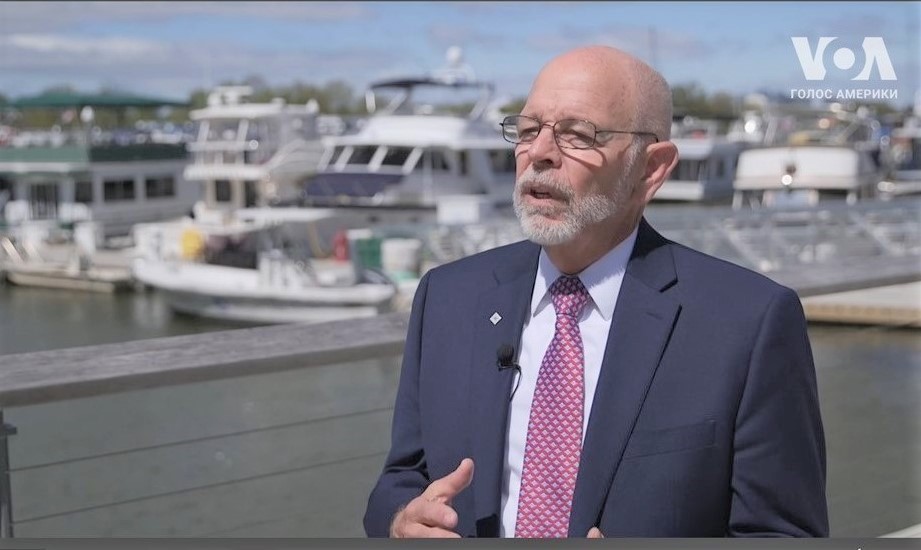
Dana A. Goward is President of the non-profit Resilient Navigation and Timing Foundation and a member of the President’s National Space-based Positioning, Navigation, and Timing Advisory Board. This Expert Opinion is exclusive to Broadband Breakfast.