




“Will Fund eLoran on a Chip” – NIST

February 11, 2016

Written by Editor

Last week the National Institute of Standards and Technology announced that it wanted to fund development of an eLoran receiver that would fit on a microchip and could be easily incorporated into a variety of systems.

The agency said its interest in this project was “… to help facilitate the broad dissemination of precise, accurate time standards and to provide robustness and resilience for critical cyber physical systems.” NIST is also responsible for the nation’s “Cyber Security Framework.”

In the announcement the agency explained the government’s concern and rationale (numbers indicate footnotes):

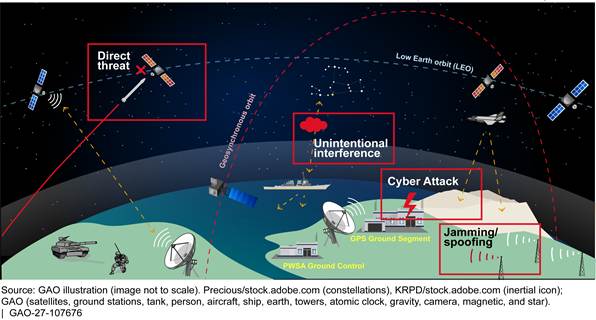
“The Global Positioning System (GPS) is used for a myriad of innovative—and now, essential—applications that were not envisioned when the system was first designed [1]. The Department of Homeland Security reports that of their 18 defined areas of U.S. critical infrastructure (e.g., communications, transportation, and energy), 16 of them rely on GPS for precision timing and synchronization in their system operations [2]. However, the GPS signal is exceedingly weak, and it is vulnerable to interference, both accidental and deliberate.

Programs have been proposed to provide resilience to the many modern cyber physical systems that rely on GPS for timing data. One that is often suggested is “eLoran,” which could augment GPS by providing a complementary data transmission channel for timing and more [3–8].”

The announcement was made as a part of NIST’s 2016 Small Business Innovative Research program. The funding opportunity to develop chip-scale eLoran receivers is described beginning on page 72.

What Can YOU Do? How Can YOU Help?

PNT is the quiet backbone of everything but too many leaders still don’t see the risk.

But you do. You understand the systems, the dependencies, the failure chains. That insight is rare — and it’s exactly what your country needs right now. Contact your government leaders and industry decision-makers and tell them resilient PNT isn’t a feature — it’s the foundation everything else depends on.

Start the Conversation

Use our Resilient PNT Key Talking Points to make the case.

U.S. Advocates

Find your representatives at Congress.gov, then use our email template to reach them in minutes.

When you get a response, let us know. Every conversation strengthens the mission.

More PNT News

Russia attacks NATO with drones – The Telegraph

Russia attacks NATO with drones – The Telegraph

Image: Shutterstock What's new: A report of Russia spoofing Ukrainian drones and sending them against NATO targets. Why it's important: Russia is attacking NATO kinetically. This is not just electronic warfare anymore. Secondarily: If true, it shows Ukraine is still...

Canada Ending Radio Time Signals (accuracy

Canada Ending Radio Time Signals (accuracy <1ms)

Image: Shutterstock What's new: Canada has announced it is cancelling its short wave time signals as of the 22nd of June 2026. Why it's important: The other sources of official time from the Canadian government (National Research Council, or NRC) are less accurate...

“We can track Starlink users…” – Fast Company

“We can track Starlink users…” – Fast Company

Image: Shutterstock What's new: A report that multiple companies are offering governments the ability to geolocate Starlink terminals.  Why it's important: Security concerns - an adversary could target, kidnap, kill, etc. users. Privacy concerns - user location data...

Honeybees teach drones how to navigate without GPS – Cybernews

Honeybees teach drones how to navigate without GPS – Cybernews

Image: Shutterstock What's new: An interesting form of autonomous navigation based on nature. Why it's important: Autonomous systems have an important place in an overall PNT architecture. For some applications they are the best/only method. This system uses just 42...

Get PNT News in Your Inbox