



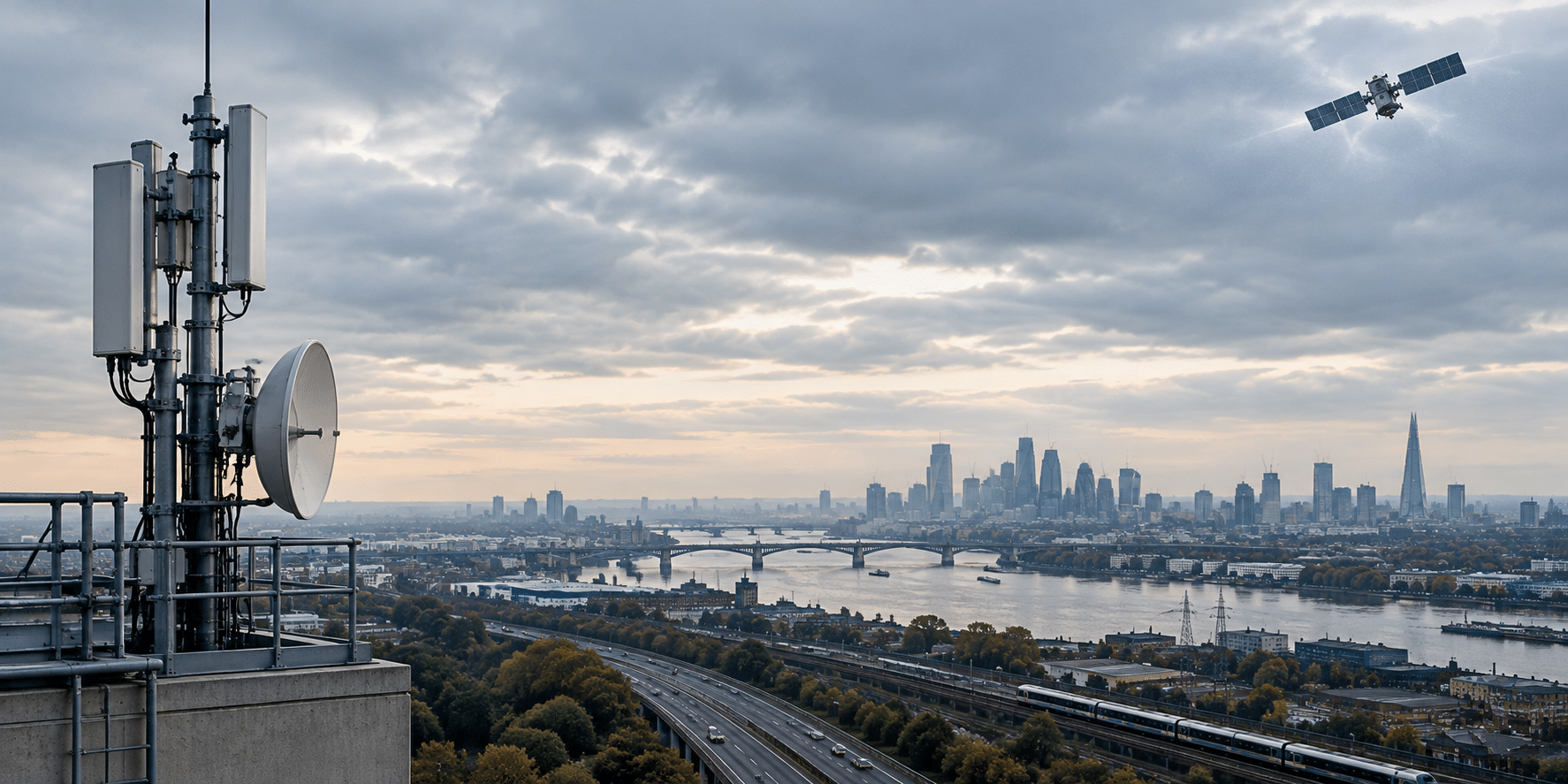
Image: ChatGPT
What’s new: A piece by our colleague Andy Proctor published by the UK’s National Preparedness Commission. His major thesis is summed up well in the first few paragraphs:
“PNT is still too often treated as a navigation issue. That is too narrow. Satellite-derived PNT does not only help ships, aircraft and vehicles find their way, it also provides the precise timing and synchronisation that supports telecommunications, financial transactions, data centres, electricity monitoring, digital trust services, logistics and emergency response. The preparedness question is therefore not whether the UK can manage without satellite navigation, but whether essential services remain within tolerance when trusted time, position or navigation is lost or corrupted.
Preparedness is most valuable when it improves resilience across many shocks, rather than examining hazards in isolation. PNT fits that test exactly because the same underlying dependency can be disrupted by technical failure, jamming, spoofing, cyber-enabled interference or severe space weather.”
Why it’s important: It is difficult for many outside the PNT community to understand how it fits into their worlds of work or concern. PNT is many things to many people. It is certainly a preparedness issue.
What else to know:
- The UK is moving out smartly to reduce its over-dependence on satellite-based navigation and timing.
- We like that Andy listed trusted time first in his title rather than going with the normal P, N, and then T. Timing is, of course, the most important of the three.
- Great article by Andy with a link to a longer more complete discussion he authored.

Andy Proctor, Vice President of the Royal Institute of Navigation & Chair, PNT Advisory Group
Positioning, navigation and timing services are a critical but often invisible part of national preparedness. The central challenge for the UK is no longer simply recognising that dependence exists but proving that essential services can continue when trusted time or position is disrupted, denied or deceived.
The UK’s preparedness system has rightly become more focused on interdependence: the way failure in one part of national life can cascade rapidly into others. Energy depends on communications; communications depend on power; transport, emergency response, finance and supply chains depend on both. Beneath much of this sits Positioning, Navigation and Timing, or PNT – a hidden dependency within other critical dependencies.
PNT is still too often treated as a navigation issue. That is too narrow. Satellite-derived PNT does not only help ships, aircraft and vehicles find their way, it also provides the precise timing and synchronisation that supports telecommunications, financial transactions, data centres, electricity monitoring, digital trust services, logistics and emergency response. The preparedness question is therefore not whether the UK can manage without satellite navigation, but whether essential services remain within tolerance when trusted time, position or navigation is lost or corrupted.
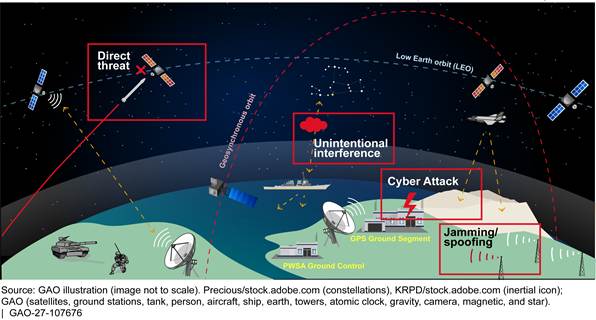
Preparedness is most valuable when it improves resilience across many shocks, rather than examining hazards in isolation. PNT fits that test exactly because the same underlying dependency can be disrupted by technical failure, jamming, spoofing, cyber-enabled interference or severe space weather.
The UK Government has described satellite-derived time and position (Global Navigation Satellite Systems – GNSS) as an “invisible utility”, and that is a useful starting point. Most organisations do not buy “PNT” as a visible service, they acquire it indirectly through the third-party providers of the services above. That invisibility creates a governance problem: many organisations with limited navigation exposure may still depend heavily on external timing for essential operations.
The national consequences are potentially systemic. Recent RethinkPNT analysis identifies eight strategic risks from loss or corruption of PNT services, led by cascading critical national infrastructure failure, severe macroeconomic disruption and multi-modal transport failure. The first of these matters most because PNT can fail upstream of other essential functions: degraded timing may first affect synchronisation, then communications, then emergency coordination, supply chains, financial services and recovery operations. The risk is not only the loss of one signal, but the weakening of the systems through which the country detects, coordinates and recovers from disruption.