




Image: Shutterstock
What’s new: An ESA NAVISP study concluded that for automated and assisted driving, three of the most important PNT areas that need to be addressed are “…availability, robustness, and verification — not accuracy alone.”
Why it’s important:
- ESA is beginning to think about PNT for unmanned systems! That’s good because without PNT, unmanned systems aren’t going anywhere. – We are guessing here that automated driving is one of the edge cases for all unmanned systems and these findings apply more broadly.
- Also the recognition that (1) peoples’ lives are going to be at stake, and (2) if you can’t trust the underlying PNT, other features don’t really matter because it won’t/can’t be used.
What else to know:
- The biggest PNT gap found by the study was ‘scalability.’ – “The largest gap is economic deployment and viability — PNT must scale beyond pilots.” We suggest this is another way of saying SWaP-C (Size, Weight, and Power – Cost). This is a big issue for automated driving, and an immense issue for unmanned aerial vehicles. To realize the real benefit of unmanned systems SWaP-C will have to be as low as possible (even if it never gets as low as a $3 GNSS chip).
- We think there are a few other PNT considerations for automated driving and other unmanned systems:
- Broad service area – We presume space-based systems will provide global service. If space-based is to be complemented by one or more terrestrial systems, those services should be as ubiquitous as possible. For example, a truck driving from Italy to France should not have to have one nav sensor for each country it passes through. This is equally or more important for aviation and maritime.
- Cost to Access – The cost to access systems should be as low as possible to encourage broad adoption. Broad adoption will foster economic order quantities for equipment and on-going work to reduce SWaP-C, and hopefully generate a virtuous cycle making everything more affordable. Having providers’ PNT systems available won’t benefit anyone if those systems are not used. Adoption, and therefore low cost to access, is critical.
- Enduring Commitment – Developers and users of unmanned systems will be reluctant to adopt a PNT service without some assurance that the service will be available for the long term – probably defined as the life of the platform. Some assurance (by government contract or endorsement?) that RF signals will stay on air, or AI and maps will continue to be updated, as two examples, will be needed to foster that all important adoption and use.
- We are intrigued by a note on the NAVISP site about this study that says “The result of a parallel contract will be presented on the 02/09/2026.” – For those of you not used to the date format, that’s the 2nd of September (next week!).
- We first became aware of this report through an item at Inside GNSS, an RNTF member and partner.
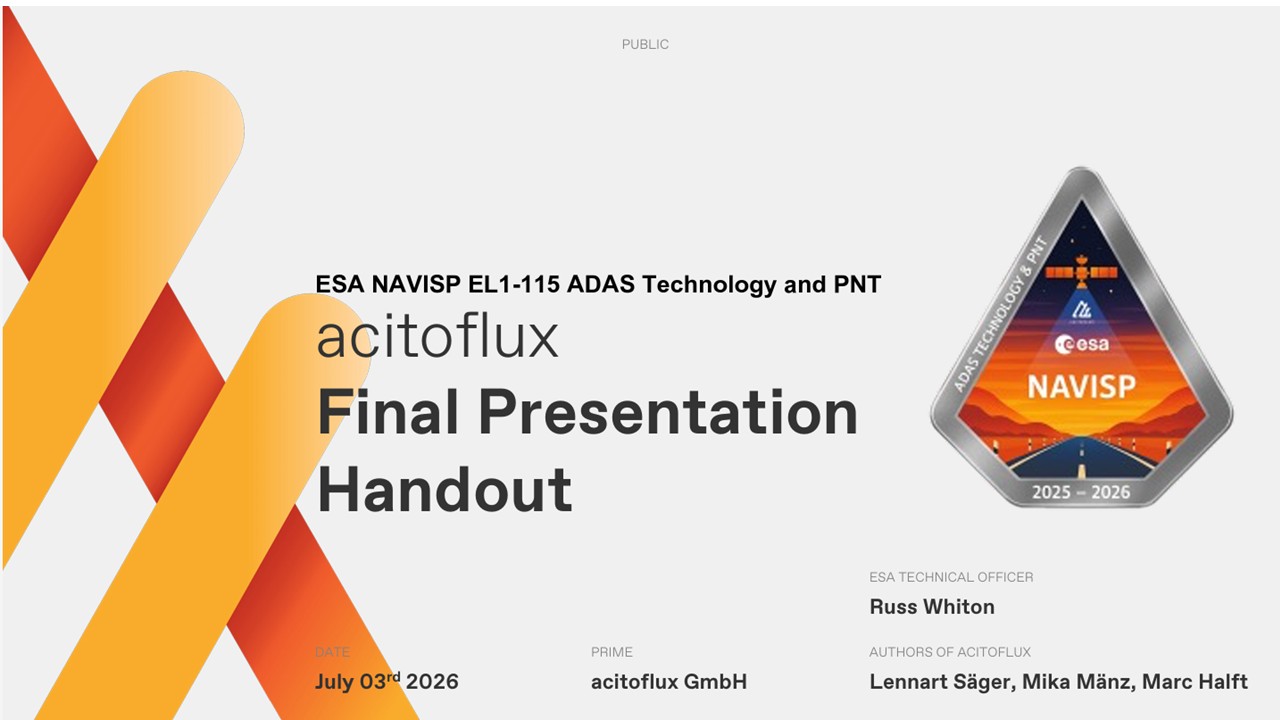
Click above image or here to access the 61 slide presentation.