



Image: Airbus
Blog Editor’s Note: The aviation industry is quickly coming to grips with the reality of routine GPS/GNSS disruptions. This is good news for everyone who flies.
It is a bit ironic, though, that aviation should lead other modes of transport in this. Commercial aircraft have backup terrestrial navigation aids and inertial sensors they can fall back on when GPS/GNSS fails. (Some private aircraft are allowed to rely entirely on GPS/GNSS for navigation.)
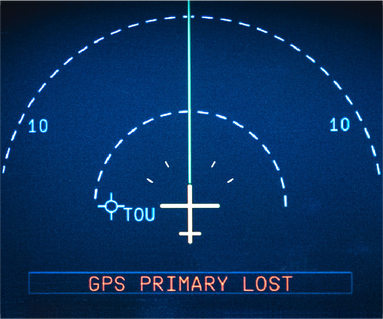
Still, the loss of GPS in a commercial aircraft can be significant. As the below article points out, “…there is a list of a dozen systems and functions that can be affected.” These include:
- The ability to precisely and safely fly directly between two points (instead the aircraft may have to fly a less efficient route to stay safe).
- Terrain awareness and warning systems making it more difficult for the pilots to avoid flying into mountains.
- A system designed to prevent running off the end of runways.
- An anti-collision and air traffic monitoring system called ADS-B Out. This would increase the risk of collision and make air traffic management more difficult.
Other location services such as a system that identifies the nearest suitable landing place in the event of an emergency will be lost.
All of this is a good reminder that location information is important for more than finding your way to someplace else.

Be Ready If You Lose GNSS Signal, Airbus Advises Pilots
Thierry Dubois January 15, 2020
LYON, France—As operators report an increasing number of global navigation satellite system (GNSS) signal losses related to radio frequency interference, Airbus is reminding pilots of the consequences and required action in the cockpit.
Various reasons may explain the loss of GPS signal. It can cause the loss of some navigation and surveillance functions. Built-in redundancies maintain position computation capability.
The power of the GPS signal “is comparable to the power emitted by a 60-watt light bulb located more than 20,000 km [12,000 mi.] away from the surface of the earth; this means the signal could easily be disturbed by any ground source located near an aircraft and emitting in the GPS L1 frequency,” Airbus experts in operations, navigation and security say in a company publication focusing on safety.
The source can be a personal jammer activated in the vicinity of an airport, a protection system around a sensitive site or military activity in a conflict zone. A GPS repeater in a hangar, used for aircraft maintenance, can cause interference with actual GPS signals, the experts note. GPS spoofing and anti-drone measures have not created any problem yet, but Airbus monitors such threats.