





Image: RNT Foundation
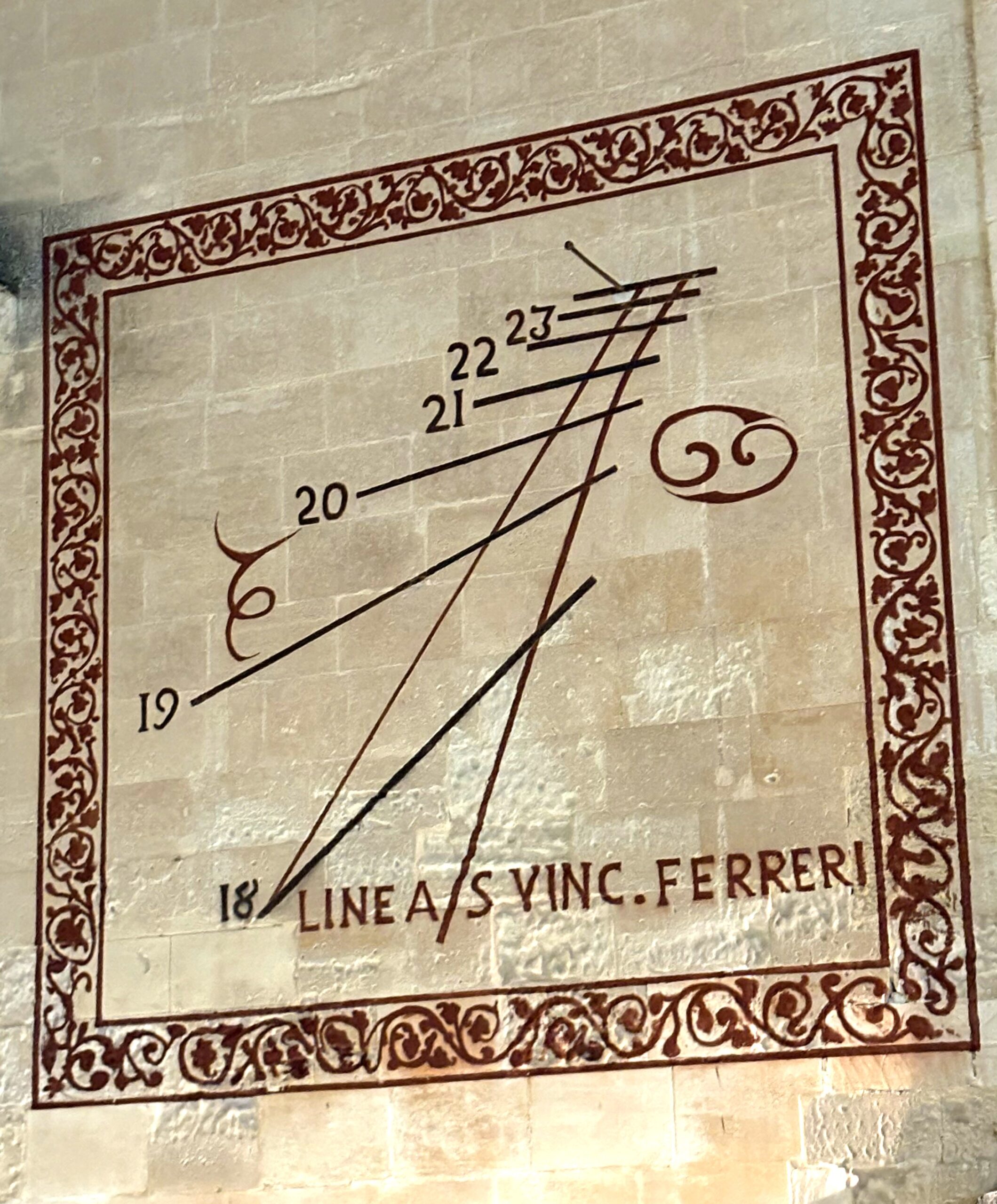
What’s new: While visiting Ragusa, Italy, we discovered a way of marking the hours of the day we had not heard of before – Italic hours which count the number of hours since the last sunset.
Why it’s important: Timekeeping has been essential to ordering life, at least since the invention of the sundial. But like Einstein’s description of time as “relative,” so is how the hours of the day are counted.
What else to know:
- At the top of the image you can see the gnomon (the stick on a sundial that casts a shadow). This one has a hole at the end so that it both casts a shadow and has a pinpoint of sunlight come through near the end of the shadow.
- This sundial is on the western wall of a church, so it begins with 18 hours after the last sunset.
- This method of marking the hours of the day was instituted first by Arab cultures around the year 1200.
- Another method was “Babilonic” which count the hours remaining until sunset. So on the below sundial the “18” would be a “6,” the “19” would be a “5” and so on.