



Image: Shutterstock
What’s new: The idea that since increasing interference looks to continue, every nation will be driven to have some level of sovereign PNT capability that is independent of but can cooperate with GNSS. Expediting that process through international cooperation is in everyone’s interests.
Why it is important: PNT is essential to so many facets of life, whatever can be done to ensure its availability will save lives and money.
What else to know: PNT resilience must be everyone’s concern.

How Diplomacy Can Save GPS

Imagine drones are forced to land. Rockets are deflected. Electrical grids, telecommunications, and transportation systems are degraded. Airliners are driven off course. Interference with Global Positioning System (GPS) signals is a fact of everyday life, and things are only getting worse.
One example is instructive. The rate at which aircraft locations are electronically manipulated, “spoofed,” increased 500 percent in the first three quarters of 2024. An average of 1,500 flights a day were impacted by the beginning of September. In a recent survey of almost 2,000 flight crew members, 70 percent described their concerns about the impact on aviation safety as either “very high” or “extreme.”
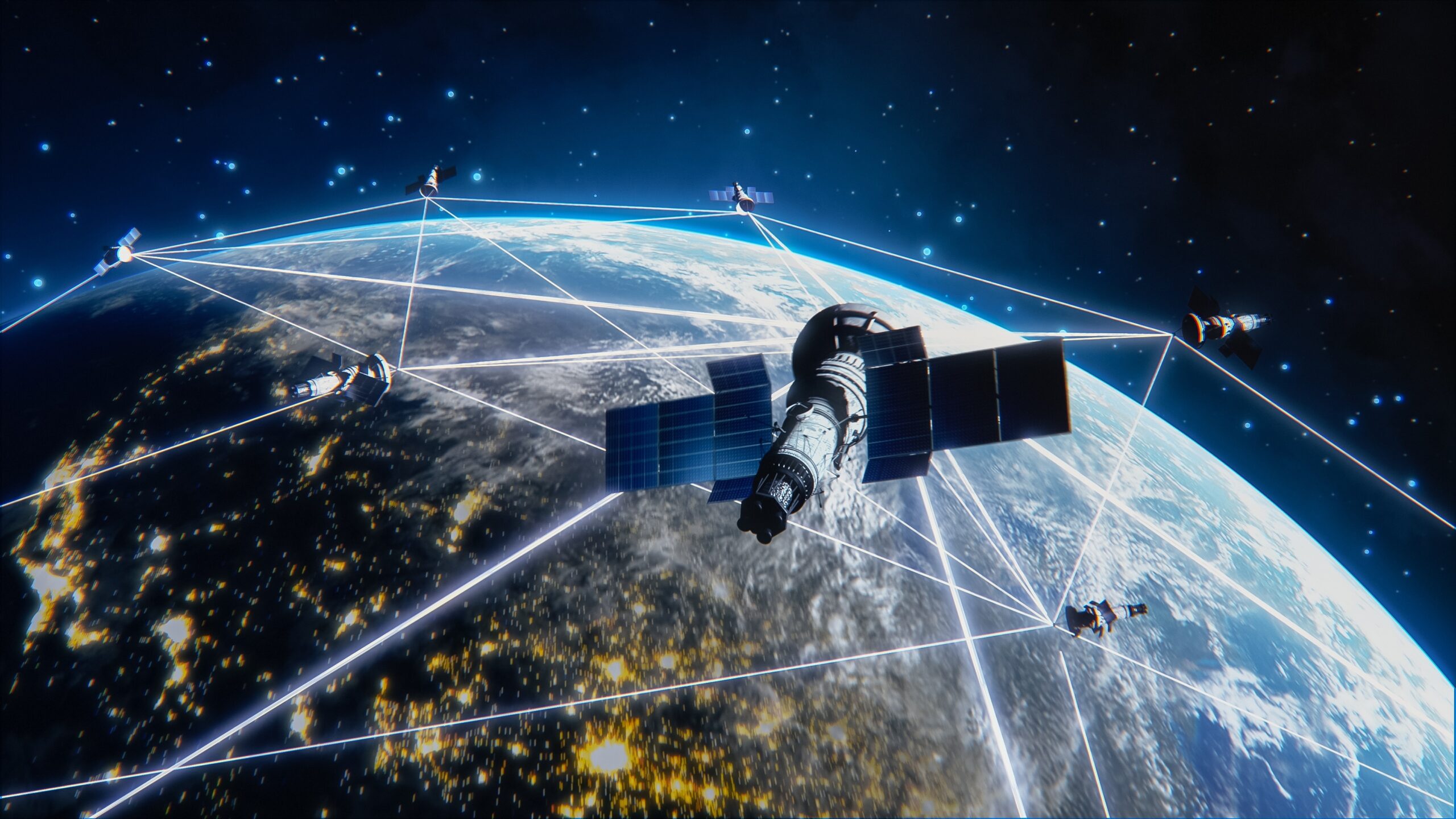
The world depends upon signals from GPS and other global navigation satellite systems (GNSS) to underpin virtually every technology. Yet the essential positioning, navigation, and timing (PNT) service they provide is incredibly vulnerable.
Weak and Vulnerable Signals
These signals from space are, of necessity, very weak. The sun shining produces stronger radio signals than a GPS satellite. Yet, through a miracle of technology, receivers on earth can find coded signals in the radio noise floor, decipher them, and tell Americans where they are and the exact time.
Exceptionally weak signals mean that almost any interference on the right frequency can prevent them from getting through. For less than ten dollars, delivery drivers looking to electronically hide from their employers, people worried about being tracked by their spouse or the government, and bad actors wanting to disable receivers can buy a GPS “jammer” from any number of internet vendors. Such sales are illegal in most countries, as is the use of such devices. However, enforcement is almost always lax or nonexistent.
Keep in mind, signal specifications were made public as part of GPS becoming America’s “gift to the world,” with the US government encouraging GPS’s broad use. Other GNSS operators did the same.
While incredibly successful in promoting the wide adoption of signals, it has also facilitated spoofing. Compounding the problem, advances in digital technology brought inexpensive software-defined transmitters into the world. Now, for a few hundred dollars, a reasonably sophisticated hobbyist can easily imitate GPS and other satellite navigation signals.
The necessity of PNT services for everyday life and over-reliance on GPS/GNSS for PNT makes the vulnerability of signals to denial and imitation a primary weapon in conflicts around the globe.
This impacts millions of those not involved in these conflicts because any receiver within line-of-sight of the interfering transmitter can be affected. Thus, cell phone systems in Finland are degraded by drone defenses in St. Petersburg. First responders across the Middle East must use paper maps because of ongoing conflicts. Ships and aircraft, hundreds of miles from military actions, lose their navigation and collision avoidance systems. Given the number of conflicts around the planet, many regions of the world are adversely affected.
To date, appeals by international maritime and aviation professional organizations have failed to make an impact on the problem. The same is true for resolutions by the United Nation’s International Maritime Organization and International Civil Aviation Organization. The International Telecommunications Union (ITU), which seems to have the principal jurisdiction for this, is proving similarly ineffective.
At its World Radio Conference in December 2023, ITU delegates approved what, at first glance, appears to be a strong resolution enjoining member states to refrain from interfering with GNSS signals. The only way the resolution could pass was with an exception allowing interference “for security or defense purposes.” It is hard to imagine any other reason for which a state would disrupt signals.
Despite the failures of international diplomacy to mitigate this growing problem, there is likely a path for it to be much more successful. Attacks on GPS and other GNSS signals are useful only because most nations and systems over-depend on them with few alternatives.
Fortunately, many countries are actively considering establishing robust and resilient terrestrial PNT systems to complement signals from space. These can provide GPS-like information, but do not have common vulnerabilities and failure modes with GNSS.
The US Department of Transportation, the lead in America for civil PNT issues, said that intelligently using a combination of independent signals from space, terrestrial broadcast, and fiber cable can be the foundation of a resilient national PNT architecture.
Establishing such a system of systems will not make the services invulnerable. However, it will make them hard enough to disrupt so that antagonists will look elsewhere for opportunities to create mischief. Some nations are already taking significant steps toward achieving such resilience.
South Korea and Saudi Arabia field high-power terrestrial systems that provide PNT. The United Kingdom fields a partial system and seems poised to expand it, as well as a deployable capability. Much of Russia is also served by such a system.
China has the world’s most complete and advanced resilient PNT architecture. It includes three constellations of satellites in different orbital planes, an extensive terrestrial broadcast system, and a 20,000-kilometer fiber timing network with 295 “timing stations.”
Yet much of the world remains vulnerable to disruption. Those who interfere are therefore incentivized.
International diplomacy, in the form of the United Nations, can help improve the inevitable transition to resilient PNT by encouraging states to implement sovereign terrestrial systems. These systems will complement and cooperate with GNSS, while also operating independently.
As part of this effort, international standards can be developed to ensure aircraft, ships, and vehicles are able to seamlessly transit between nations. Technical assistance can be provided to nations with little local expertise in the field.
These efforts will greatly reduce the incentive to interfere with GNSS, thereby making it safer and more reliable. It will also reinforce the sovereignty and security of every involved nation.
The alternative is to continue down the path of increasing interference and increasing risk to life and property. Safety margins are already impacted. Ships are already colliding, and passenger aircraft are nearly straying, unannounced, into hostile airspace, all because of spoofing. It is only a matter of time before the world witnesses an avoidable tragedy.
The international community, perhaps in the form of a United Nations task force, must intervene to protect these fragile signals from space and disincentivize future disruptions.
Safer and more reliable signals from space and resilient sovereign terrestrial PNT are in the long-term interest of every nation. Diplomatic efforts must illuminate that shared interest bring parties together and nurture progress for everyone’s benefit.
Dana A. Goward is President of the Resilient Navigation and Timing Foundation, www.RNTFnd.org, an educational and scientific charity. He is a member of the president’s National Space-based Positioning, Navigation, and Timing Advisory Board and formerly served as the maritime navigation authority for the United States. Views expressed in this article are the author’s own.