



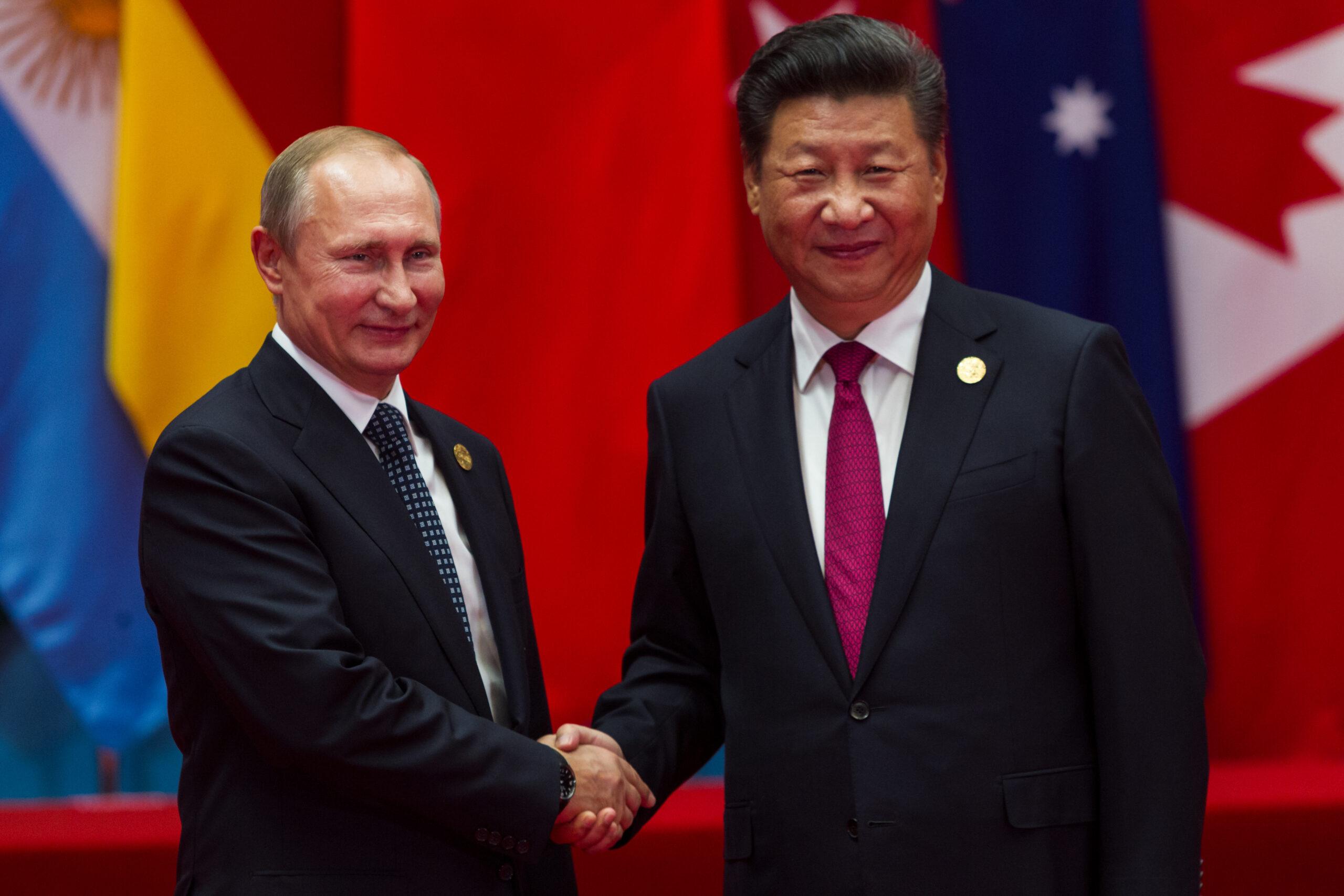
Image: Shutterstock
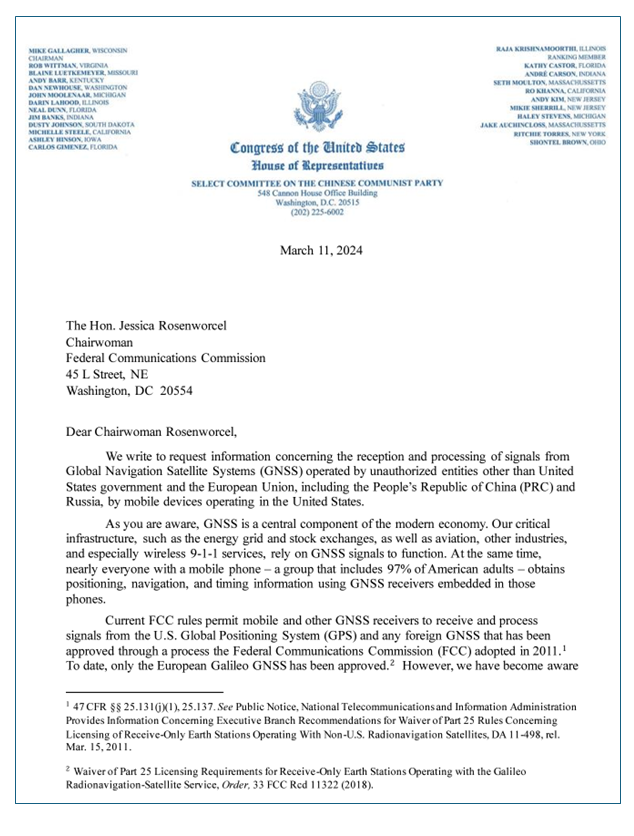
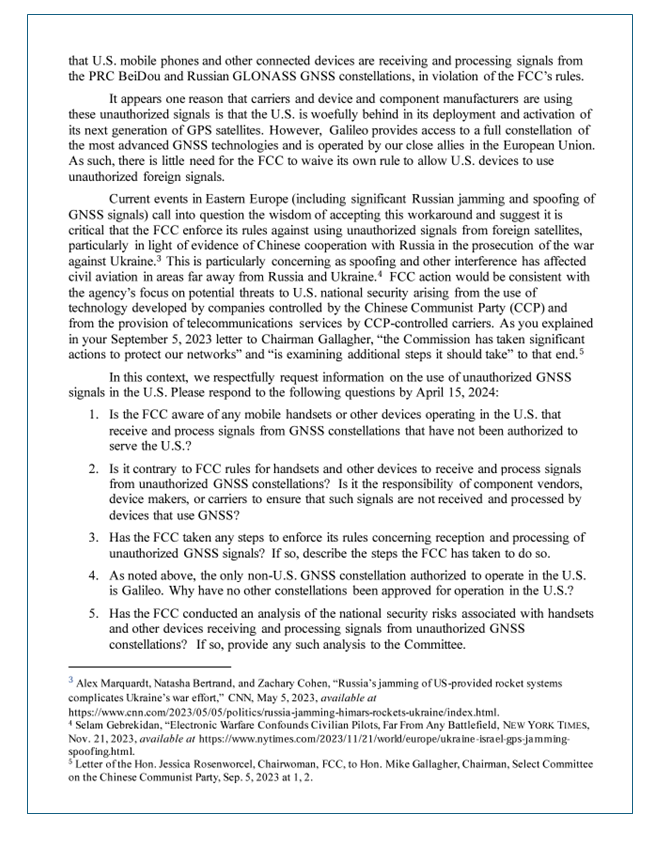
What’s New: A letter from Rep. Gallagher, chair of the House Select Committee on the Strategic Competition Between the United States and the Chinese Communist Party to the FCC. It poses lots of interesting assertions and questions including:
- An assertion that one reason devices use GLONASS and BeiDou is that “the U.S. is woefully behind in its deployment and activation of its next generation of GPS satellites.”
- Asking if there is a national security risk with devices using GLONASS and BeiDou.
Why It’s Important:
- Most all devices use multiple GNSS. Almost all in critical applications and infrastructure do.
- Russia’s GLONASS became operational in 1993. Device manufacturers have been including its signals in devices for 30 years.
- PNT from GPS and other GNSS underpins most every technology.
- Cybersecurity is a growing concern everywhere.
What Else To Know:
- The general understanding of FCC regulations is that use of GLONASS and BeiDou is not authorized in the U.S. because the FCC has not received and approved an application from Russia and China.
- The current dust up appears to be the result of lobbying by a GPS receiver manufacturer that has focused its products on the newer, stronger, more secure civil L-5 signal. The first L-5 signal was broadcast from an operational GPS satellite in 2010. Some argue enough signals were available in 2014 to begin use, but it is still set as “pre-operational” and “unhealthy.”
- U.S. Space Force presenters have said that L-5 activation will happen once OCX is operational. As most folks know, OCX is years late and billions over its original budget.
- If use of GLONASS and BeiDou are national security concerns, and we don’t know that they are, we presume it is because they could introduce malware into receivers and the systems that include them.
- If that is true, then we expect that GPS receivers would be a concern also. Spoofers could produce a valid GPS-like signal and include malware with it.

Your smartphone is asking Russia and China for directions. The FCC’s investigating if that’s a problem.
The Federal Communications Commission is opening an investigation into how device makers use location signals from foreign satellites.
The federal government is investigating the extent to which cellphones and other communications devices are using Russian and Chinese satellites to supplement critical GPS location services domestically, and whether that poses a national security threat.
The probe being launched by the Federal Communications Commission focuses on how mobile device makers including Apple, Google, Motorola, Nokia and Samsung — which collectively provide over 90 percent of the smartphones in the nation — receive and process location signals from other satellite constellations controlled by foreign adversaries, agency spokesperson Jonathan Uriarte told POLITICO.