



Get the Bullseye Off GPS – OpEd SpaceNews

April 21, 2022

Written by Editor

Image: Shutterstock

Blog Editor’s Note: The author is President of the RNT Foundation.

 

Op-ed | Get the Bullseye Off GPS

by  — 

While some have opined that the solution is more and better GPS, the most effective and least expensive solution is to make GPS a much less attractive target. 

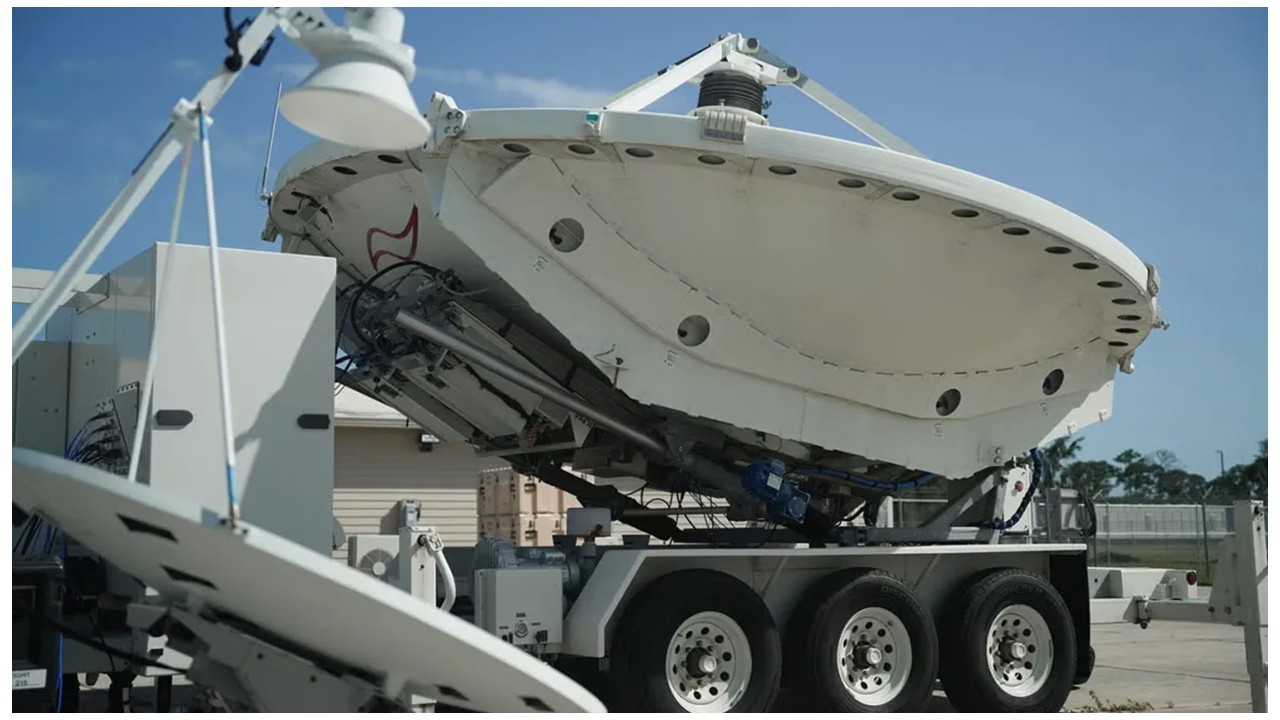
On Nov.15, 2021, a missile streaked into space from Russia. Once above the atmosphere, it released a kinetic kill vehicle that destroyed a retired Russian satellite. The resulting debris endangered other satellites and the International Space Station, including the Russian members of its crew.

A week later Russian troops massed along the border with Ukraine. A Russian news commentator recognized as Putin’s mouthpiece bragged that Russia could destroy all 32 US Global Positioning System (GPS) satellites and blind NATO forces.

This was a particularly ominous warning.

U.S. critical infrastructure relies on precise timing and navigation signals from GPS satellites. At a December public meeting, a member of the National Security Council summed this up by saying “GPS is still a single point of failure” for America.

READ MORE

Blog Editor’s Post Script – The RNT Foundation advocates for policies and systems to protect GPS signals and users. We do not generally advocate for specific technologies to “get the bullseye off GPS.” 

However, when the US PNT Advisory Board has recommended implementation eLoran we supported those recommendations. Similarly, when the US government stated they would implement eLoran, we supported that course of action.

The most recent government report on this was from the Department of Transportation in 2021. It stated that a system of systems approach with L-band signals from space, UHF and LF terrestrial signals, and the terrestrial transmitters supported by fiber was needed. We support this approach.

We earnestly hope the government will soon move from identifying solutions, to implementing some.


What Can YOU Do? How Can YOU Help?

PNT is the quiet backbone of everything but too many leaders still don’t see the risk.

But you do. You understand the systems, the dependencies, the failure chains. That insight is rare — and it’s exactly what your country needs right now. Contact your government leaders and industry decision-makers and tell them resilient PNT isn’t a feature — it’s the foundation everything else depends on.

Start the Conversation

Use our Resilient PNT Key Talking Points to make the case.

U.S. Advocates

Find your representatives at Congress.gov, then use our email template to reach them in minutes.

When you get a response, let us know. Every conversation strengthens the mission.

More PNT News

“We can track Starlink users…” – Fast Company

“We can track Starlink users…” – Fast Company

Image: Shutterstock What's new: A report that multiple companies are offering governments the ability to geolocate Starlink terminals.  Why it's important: Security concerns - an adversary could target, kidnap, kill, etc. users. Privacy concerns - user location data...

Honeybees teach drones how to navigate without GPS – Cybernews

Honeybees teach drones how to navigate without GPS – Cybernews

Image: Shutterstock What's new: An interesting form of autonomous navigation based on nature. Why it's important: Autonomous systems have an important place in an overall PNT architecture. For some applications they are the best/only method. This system uses just 42...

PNT cyber guidance update – NIST wants your input

PNT cyber guidance update – NIST wants your input

Image: RNT Foundation What's new: Draft updated PNT cyber guidance from NIST. They are seeking public comment and input. Why it's important: PNT and cyber are well intertwined. PNT is an essential tech infrastructure so protecting it from malicious cyber effects is...

GPS Is Not Guaranteed: Impact on ports (Webinar 21 May)

GPS Is Not Guaranteed: Impact on ports (Webinar 21 May)

Image: Shutterstock What's new: A webinar featuring our colleague Matt Shirley. Matt is a professional port pilot and has some interesting insights on maritime reliance on GPS/GNSS, how things could go wrong without resilient PNT, and how things could go better with...

Get PNT News in Your Inbox