Blog Editor’s Note: Good thing it was just a close call. Though we learned in aviation safety class that catastrophic accidents are almost always preceded by close calls. And as you can see from the article, there have been a number of those already.
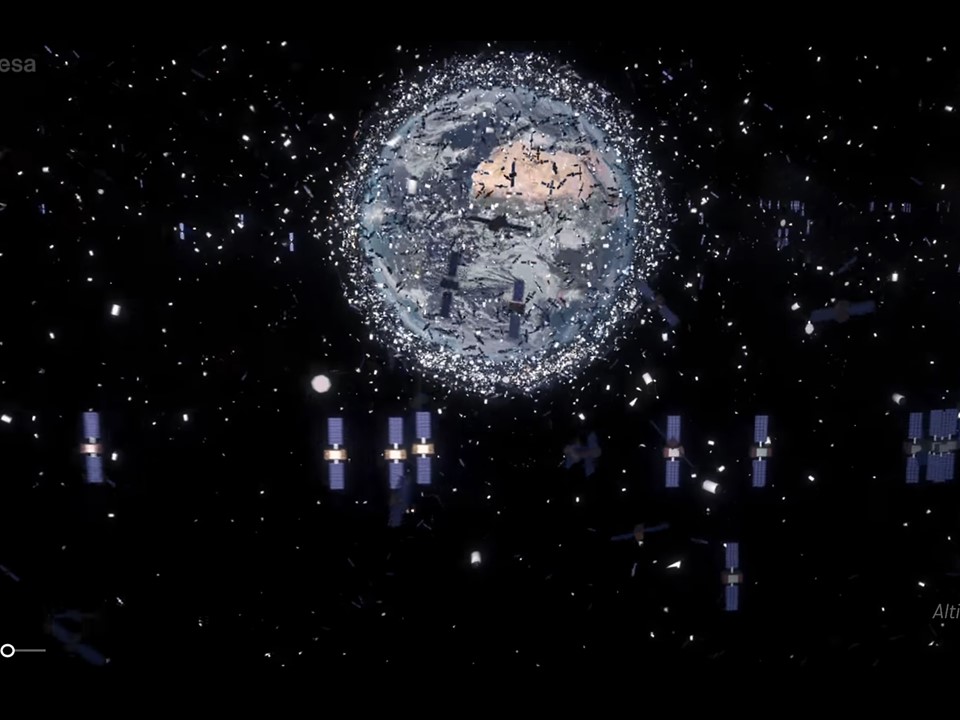
Worst case scenarios include a Kessler Syndrome event where collisions with debris make more debris which cause more collisions (see the opening of the movie “Gravity”). This causes a blanket of rapidly moving debris at Low Earth Orbit that essentially traps humanity on the planet. it would even be difficult to make astronomical observations or replenish satellites like GPS that are at Medium Earth Orbit.
We do talk about Armageddon-like scenarios sometimes in this blog. Unless people think about such things, it will be pretty hard to avoid them.
The astronauts of SpaceX’s Crew-2 mission for NASA had a brief moment of suspense after their spectacular launch on Friday (April 23) when a piece of space debris passed unexpectedly close by their Crew Dragon capsule.
The space junk encounter, called a conjunction, occurred at 1:43 p.m. EDT (1743 GMT) as the four Crew-2 astronauts were preparing to sleep after a long day. Their Crew Dragon Endeavour docked at the space station early Saturday.
“For awareness, we have identified a late breaking possible conjunction with a fairly close miss distance to Dragon,” SpaceX’s Sarah Gilles told the astronauts about 20 minutes before the conjunction on Friday. “As such, we do need you to immediately proceed with suit donning and securing yourselves in seats.”
Gilles told the astronauts to get back into their spacesuits and seats as safety precaution in case of an impact. You can watch the exchange here, courtesy of Raw Science.
PNT is the quiet backbone of everything but too many leaders still don't see the risk.
But you do. You understand the systems, the dependencies, the failure chains. That insight is rare — and it's exactly what your country needs right now. Contact your government leaders and industry decision-makers and tell them resilient PNT isn't a feature — it's the foundation everything else depends on.