




Blog Editor’s Note: Two different opinions recently published by Defense One. It is interesting, though, that their disagreement is based on the costs of satellites and anti-satellite weapons. Both agree that over-reliance on space systems is a really bad idea.
From Adam Routh’s “Should Double Down” opinion:
“Paul is not wrong to suggest America’s military advantage cannot rely on space systems alone. Resiliency does require dispersal and variety.”
Well said. We hope our military and civil users take this to heart.
Defenseone.com
The US Military Should Not Be Doubling Down on Space
Satellites are only getting harder to defend. The Pentagon needs to find a better way to do its C4ISR and precision-navigation-timing missions.
Yes, a #SpaceForce is a dumb idea, but not because@realDonaldTrump said it. The U.S. military has real problems in space and a Space Force is likely to make them worse, not better.
Space is “congested, contested, and competitive” — as many have pointed out — and the U.S. advantages in space are waning. But responding by creating a Space Force is building a castle on a foundation of sand.
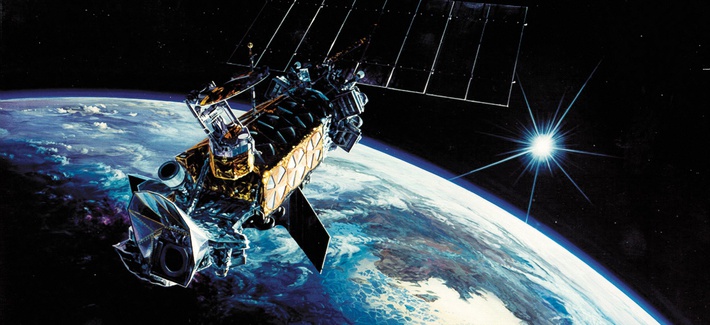
Space is an inherently vulnerable and offense-dominant domain. Satellites move through predictable orbits. There simply aren’t many good options for space hardening/defenses.
The US Military Should Be Doubling Down on Space
BY ADAM ROUTH
Commercial innovation is slashing costs and boosting capabilities fast enough to remain useful even as antisatellite weapons improve.
My colleague Paul Scharre recently wrote that the development of a #SpaceForce is misguided. His argument is based on the assumption that it will generally be cheaper to build antisatellite weapons than to produce resilient space systems. Therefore, he argues, space should only be one piece of a larger C4ISR and precision-navigation-and-timing system with terrestrial-based options that use drone swarms and advance battle networks.
Paul is not wrong to suggest America’s military advantage cannot rely on space systems alone. Resiliency does require dispersal and variety. What he gets wrong, however, is the assumption that space systems will continue to sit on the wrong side of the cost proposition compared to ASAT weapons.