


With $2T in Damage Looming, Senate Passes Space Weather Act

May 4, 2017

Written by Editor

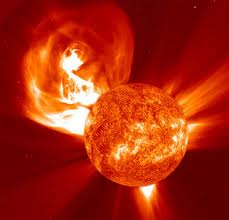
NASA Image

Bill Calls for Protection of Critical Infrastructure, National Security Assets

On the first of September 1859 the Earth was hit by a massive solar flare. It was so strong that currents induced in telegraph wires set offices afire.  Later dubbed “the Carrington event,” if it were to happen today, the National Academy of Sciences estimates that the impact would be devastating – $2 trillion in damage and years of recovery.  According to some experts, there is a 12% chance of it happening again in the next 10 years, almost 50% in the next 50 years.

On Wednesday the Senate unanimously passed S.141, the “Space Weather Research and Forecasting Act.”  The majority of the bill addresses achieving greater coordination and cohesion between the many places in the federal government that deal with space weather. It also calls for additional solar imaging capability to allow better research, and hopefully better prediction of damaging solar events.

Of special interest to our readers, Section 4 of the bill directs the:

  • Secretary of Homeland Security to “support critical infrastructure providers in managing the risks and impacts associated with space weather,” and
  • National Security Council to “develop national security mechanisms to protection national security assets from space weather threats.

By our read it looks like a great bill and we hope it is enacted into law.

More importantly, we hope folks in the administration take it seriously and act on its provisions.  Unfortunately, that is not a given.

For example, nine years have come and gone since the US government announced it would protect GPS signals and PNT services from massive solar flares and other disruptions with a terrestrial eLoran system. Few reasonable people would argue that GPS doesn’t fit the category of “national security asset” or “critical infrastructure.” Yet, despite subsequent assurances, no action has been taken.

Let’s hope the government does decide to act soon and seriously to protect the nation from damaging solar activity and the wide variety of other threats to our GPS and PNT.

RNT Foundation thanks the bill sponsors in the Senate:

Sen Gary Peters (D-MI), Sen Cory Gardener (R-CO), Sen Roger Wicker (R-MS), Sen Cory Booker (D-NJ), and Sen Amy Klobuchar (D-MN)

What Can YOU Do? How Can YOU Help?

PNT is the quiet backbone of everything but too many leaders still don’t see the risk.

But you do. You understand the systems, the dependencies, the failure chains. That insight is rare — and it’s exactly what your country needs right now. Contact your government leaders and industry decision-makers and tell them resilient PNT isn’t a feature — it’s the foundation everything else depends on.

Start the Conversation

Use our Resilient PNT Key Talking Points to make the case.

U.S. Advocates

Find your representatives at Congress.gov, then use our email template to reach them in minutes.

When you get a response, let us know. Every conversation strengthens the mission.

More PNT News

“We can track Starlink users…” – Fast Company

“We can track Starlink users…” – Fast Company

Image: Shutterstock What's new: A report that multiple companies are offering governments the ability to geolocate Starlink terminals.  Why it's important: Security concerns - an adversary could target, kidnap, kill, etc. users. Privacy concerns - user location data...

Honeybees teach drones how to navigate without GPS – Cybernews

Honeybees teach drones how to navigate without GPS – Cybernews

Image: Shutterstock What's new: An interesting form of autonomous navigation based on nature. Why it's important: Autonomous systems have an important place in an overall PNT architecture. For some applications they are the best/only method. This system uses just 42...

PNT cyber guidance update – NIST wants your input

PNT cyber guidance update – NIST wants your input

Image: RNT Foundation What's new: Draft updated PNT cyber guidance from NIST. They are seeking public comment and input. Why it's important: PNT and cyber are well intertwined. PNT is an essential tech infrastructure so protecting it from malicious cyber effects is...

GPS Is Not Guaranteed: Impact on ports (Webinar 21 May)

GPS Is Not Guaranteed: Impact on ports (Webinar 21 May)

Image: Shutterstock What's new: A webinar featuring our colleague Matt Shirley. Matt is a professional port pilot and has some interesting insights on maritime reliance on GPS/GNSS, how things could go wrong without resilient PNT, and how things could go better with...

Get PNT News in Your Inbox